A professional peat substrate connects a defined peat structure with the physical, chemical and operational needs of a crop program. Perlite, wood fiber, coir, bark, clay, fertilizer and wetting agents can change air capacity, moisture distribution, drainage, handling and crop management. Commercial buyers should therefore compare finished growing media, base mixes and raw peat materials according to intended use rather than ingredient names alone.
- Peat moss is a raw material, while a peat substrate is a structured or formulated growing medium intended for a defined production use.
- Peat fraction, total porosity, air-filled porosity, water-holding behavior, compaction and container geometry all influence root-zone performance.
- Perlite, wood fiber, coir, bark, clay, fertilizer and wetting agents change different substrate properties and should not be treated as interchangeable additives.
- Seed and plug mixes, high-porosity substrates, base grower mixes, organic mixes and controlled-release fertilizer mixes solve different production needs.
- The correct growing medium depends on crop stage, container size, irrigation method, climate, crop duration and whether the buyer needs a finished mix or a base material for local formulation.
- Commercial trials should reproduce the real crop, filling method, irrigation water, container, fertilizer program and production duration before larger volumes are ordered.
What makes a peat substrate different from peat moss:
Peat substrates are often discussed as if peat alone defines the product. In professional horticulture, that is only the starting point. Peat moss is a raw material. A peat substrate is a structured or formulated growing medium intended to perform in a defined crop, container and production system.
The difference matters commercially. A substrate manufacturer may buy screened peat as a base for local blending. A propagation nursery may need a ready-to-use seed and plug mix. A greenhouse grower may need a peat and perlite mix with a more open root zone. These products can share the same raw-material origin while serving very different purposes.
For professional buyers, the useful question is not simply what ingredients are listed. The better question is what physical, chemical and operational result the growing medium is designed to produce.
A professional peat substrate therefore connects peat fraction, added components, pH direction, nutrient strategy, wetting behavior, packaging and technical support with the intended crop workflow.
Structure is the foundation of substrate performance:
The spaces inside a growing medium hold both water and air. High total porosity does not automatically mean that a substrate is suitable for every crop. What matters is how pore sizes are distributed, how much air remains after irrigation, how much water is available to roots and how the structure changes under filling, compaction and repeated watering.
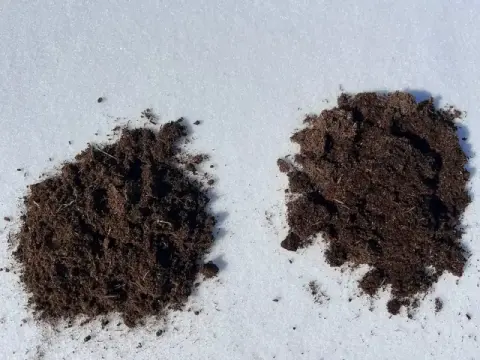
Fine peat fractions can create close contact around seeds, cuttings and small root systems. They can support uniform tray filling and moisture distribution, but excessive compression or unsuitable irrigation can reduce air space.
Coarser peat fractions create larger pores and can support drainage, oxygen recovery and longer-term structural stability. They may be useful in larger containers and longer crop cycles, but their dry-down pattern and irrigation demand can differ from a fine mix.
Container geometry also changes performance. The same peat substrate can retain a different water-to-air balance in a shallow tray, a tall nursery pot and a large commercial container. Filling density, transport, storage and the grower's irrigation method add further variation.
This is why peat fraction should be selected together with crop stage, container size, irrigation frequency and production duration rather than treated as an isolated specification.
For a more specific comparison of white, brown and black peat descriptions, decomposition and fraction, see White Peat vs Brown Peat vs Black Peat.
Buyers who need more detail about origin, screening and fraction can read Baltic Peat Moss: How Origin and Processing Shape Growing Media Performance.
How components change peat-based growing media:
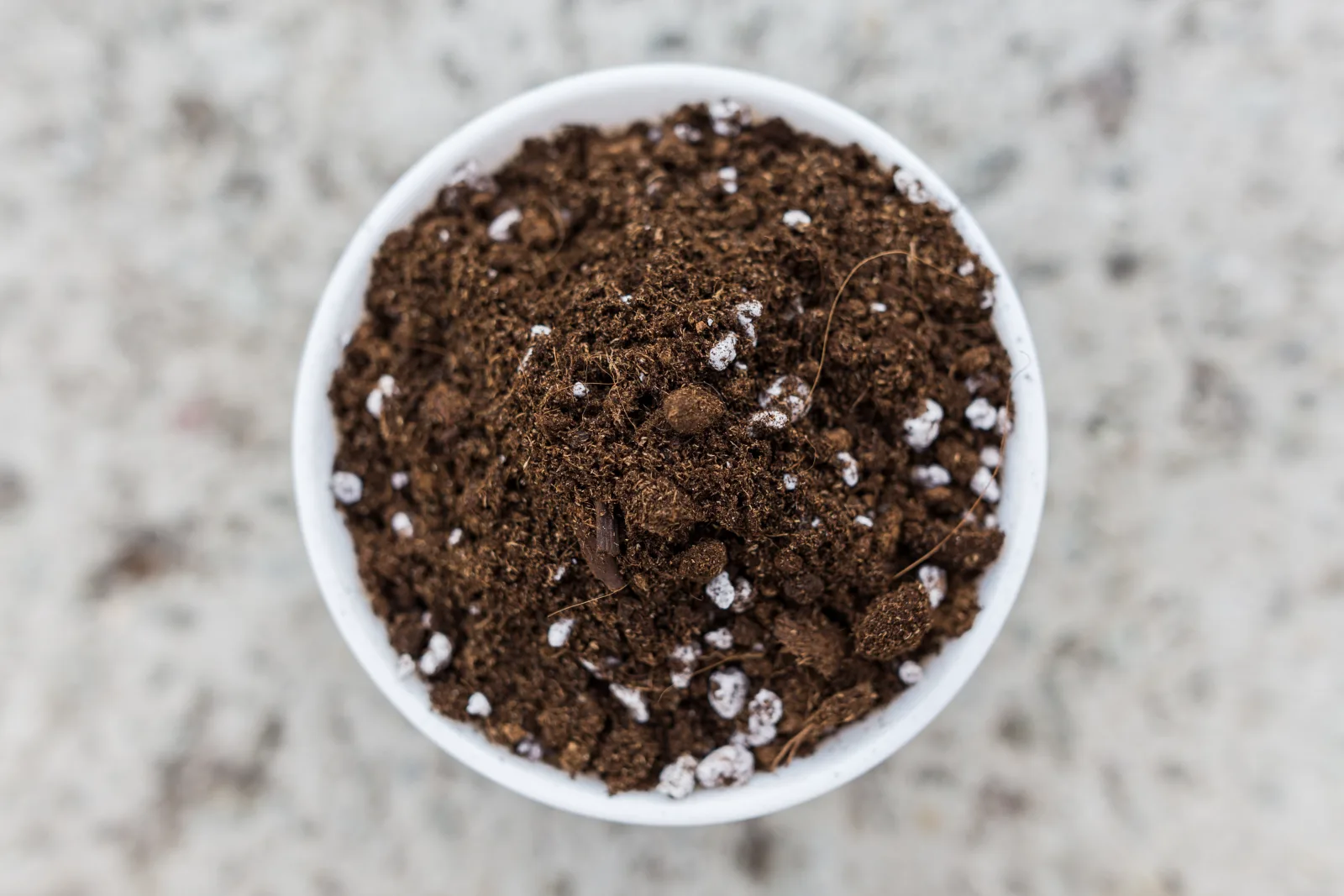
Professional growing media manufacturers use additional constituents to change specific properties of a peat substrate. The purpose is not to add as many materials as possible. The purpose is to reach a defined root-zone and production result.
Perlite is a lightweight porous mineral component. In peat and perlite grower mixes, it is commonly used to create a more open physical structure and support drainage and air capacity. The result still depends on perlite size, inclusion rate, peat fraction, compaction and container shape. Peat and Perlite Growing Media explains the buyer questions that connect those variables to a commercial crop program.
Wood fiber changes the pore structure and handling behavior of a mix. It can reduce bulk density and support a more open substrate direction, but the irrigation program may need to account for a different wetting and dry-down pattern. For a grower-side example of this transition, read Cultivating Success: A Grower's Journey with ASB's Wood Fiber Mix.
Coir can contribute water-holding and air-filled pore space, depending on whether the formulation uses coir pith, fiber, chips or a combination. Its salt content, buffering, particle distribution and consistency need to be understood before it is integrated into a professional crop program.
Bark can create a coarser and more durable structure for nursery stock, longer-cycle crops and formulations that need larger pores. The maturity, particle size and consistency of the bark matter because an unsuitable material can change nitrogen availability, pH behavior and physical stability.
Clay can influence nutrient and water buffering in certain formulations. Fertilizers define the starting nutrient direction, while controlled-release fertilizer mixes are designed to supply nutrients over a planned period. Wetting agents can improve initial wetting and re-wetting, particularly when dry peat-based materials would otherwise resist uniform water movement.
No constituent is automatically superior. Perlite, wood fiber, coir, bark, clay and fertilizer solve different problems. Their value depends on the final formulation and how it fits the crop.
The main categories of professional peat substrates:
Base Grower Mixes:
A base grower mix provides a peat-based foundation for a defined general use or for further adjustment. Some base mixes contain no aggregate, while others include limited additives or pH adjustment. The buyer must confirm whether the product is ready to use or whether fertilizer, perlite, coir, bark or another component will still be added locally.
Peat and Perlite Grower Mixes:
These formulations combine peat with perlite to support a more open root zone. They are relevant where irrigation, container type or crop duration requires additional drainage and air capacity. The inclusion of perlite should be connected to a measurable production objective, not treated as a quality label by itself.
Peat and Wood Fiber Mixes:
These mixes combine peat with a fibrous constituent to change pore distribution, bulk density and water behavior. They can support reduced-peat formulation strategies and different crop-control approaches, but they should be trialled under the intended irrigation system.
Seed and Plug Mixes:
Seed and plug mixes are designed for small cells, trays, seeds, cuttings and young plants. Uniform structure, clean filling, predictable first wetting and controlled moisture around a small root volume are central priorities. The ASB Professional seed and propagation range provides product directions for this production stage, while How to Choose Seedling Mixes for Uniform Germination explains how to evaluate them in a commercial propagation program.
High Porosity Substrates:
A high-porosity substrate aims to preserve a larger volume of pore space for air and water. In practice, growers should focus on air-filled porosity after irrigation, drainage, re-wetting and whether the crop still receives enough useful moisture between irrigation events.
Organic, Coir, Bark and Controlled Release Fertilizer Mixes:
These categories respond to different commercial needs. Organic mixes need formulation and documentation that fit the intended organic program. Coir and bark mixes change physical and chemical behavior. Controlled release fertilizer mixes connect the substrate with a planned nutrient-release period. Each should be evaluated as a complete system rather than by one component name. Organic Growing Mixes: What Professional Growers Should Check Before Buying gives a focused framework for crop fit, moisture behavior and documentation.
Crop use decides which substrate properties matter most:
A peat substrate for propagation does not have the same priorities as a substrate for a long-cycle greenhouse crop. The crop stage, root volume, irrigation system and production duration determine which physical properties matter most.
Young plants need uniform filling, close root contact and predictable moisture in small cells. Leafy greens and herbs may prioritize repeatable wetting and short-cycle uniformity. Fruiting vegetables in larger containers may need more structural stability and air capacity over a longer period.
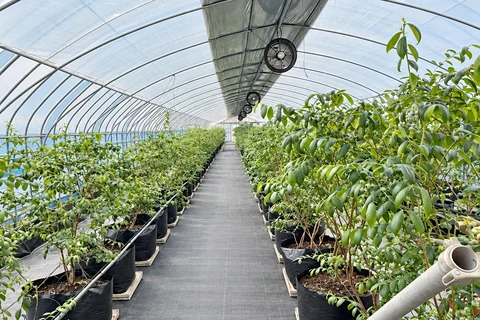
Blueberry production adds another layer because the crop requires an acidic root-zone direction together with careful water and oxygen management. The article Substrate for Blueberries: How pH, Structure and Water Management Support Commercial Production explains this crop-specific system in more detail.
Commercial vegetable programs can review Substrate for Vegetables: How Growing Media Supports Commercial Crop Performance for a closer look at irrigation, crop cycle, air capacity and production workflow.
Ornamentals, nursery stock and longer-cycle container crops may place greater emphasis on coarse structure, stability and repeated wetting over time. This is why one universal professional growing medium cannot serve every crop equally well.
Raw peat material, base mix or finished growing medium:
One of the most important purchasing decisions is identifying what level of formulation the buyer actually needs.
A substrate manufacturer may need a peat raw material with a defined fraction, moisture condition and packaging format. This allows local blending with perlite, coir, bark, wood fiber, fertilizer or other constituents.
A grower with an internal formulation process may prefer a base grower mix that reduces preparation work while preserving flexibility. The team must still know which adjustments remain necessary before planting.
A grower without blending capacity usually needs a finished growing medium with a defined use direction. In that case, the supplier should explain structure, pH, EC, fertilizer, wetting, handling, storage and irrigation expectations.
These options should not be compared only by price per unit. They include different formulation work, technical responsibility, equipment needs and production risk.
The ASB Professional raw materials range is relevant for buyers who blend locally, while the Worldwide product portfolio includes finished and crop-specific growing media directions. For North American buyers comparing bulk source material, the Canadian Sphagnum Peat Moss Supplier Guide covers consistency, bale format, documentation and seasonal supply planning.
How commercial buyers should compare peat substrates:
A meaningful product comparison starts with the intended use. Buyers should define the crop, crop stage, container, irrigation method, water source, climate, production duration and expected volume before comparing specifications.
The physical review should include peat fraction, added components, bulk density or filling behavior, water-holding characteristics, air capacity, drainage, first wetting, re-wetting and structural stability.
The chemical review should include starting pH, EC, fertilizer direction, lime or pH adjustment, controlled-release fertilizer where relevant and the expected influence of irrigation water and fertigation.
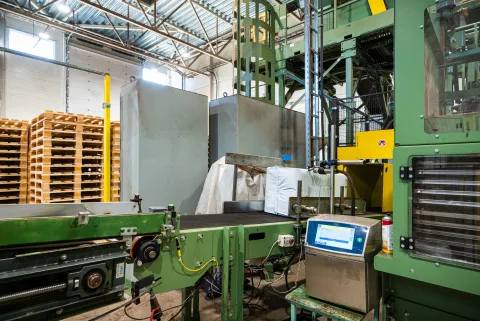
The operational review should include machine filling, compaction, dust, storage, packaging, pallet or container fit, seasonal lead times, batch documentation and technical contact.
A commercial greenhouse substrate supplier should be able to explain not only what the mix contains, but why it fits the crop and how the buyer should test it. The commercial greenhouse substrate supplier checklist provides a broader procurement framework.
Quick buyer snapshot:
| Question | What to confirm |
|---|---|
| Product level | Raw peat, base grower mix or finished growing medium |
| Physical fit | Fraction, air capacity, water behavior, drainage and stability |
| Crop fit | Crop stage, container, irrigation and production duration |
| Components | Purpose of perlite, wood fiber, coir, bark, clay or fertilizer |
| Commercial fit | Packaging, documentation, trial support, volume and delivery window |
How to run a useful peat substrate trial:
A useful trial reproduces the real production system. Use the intended crop or cultivar, container, filling equipment, compaction, irrigation water, emitter setup, fertilizer program, climate and crop duration.
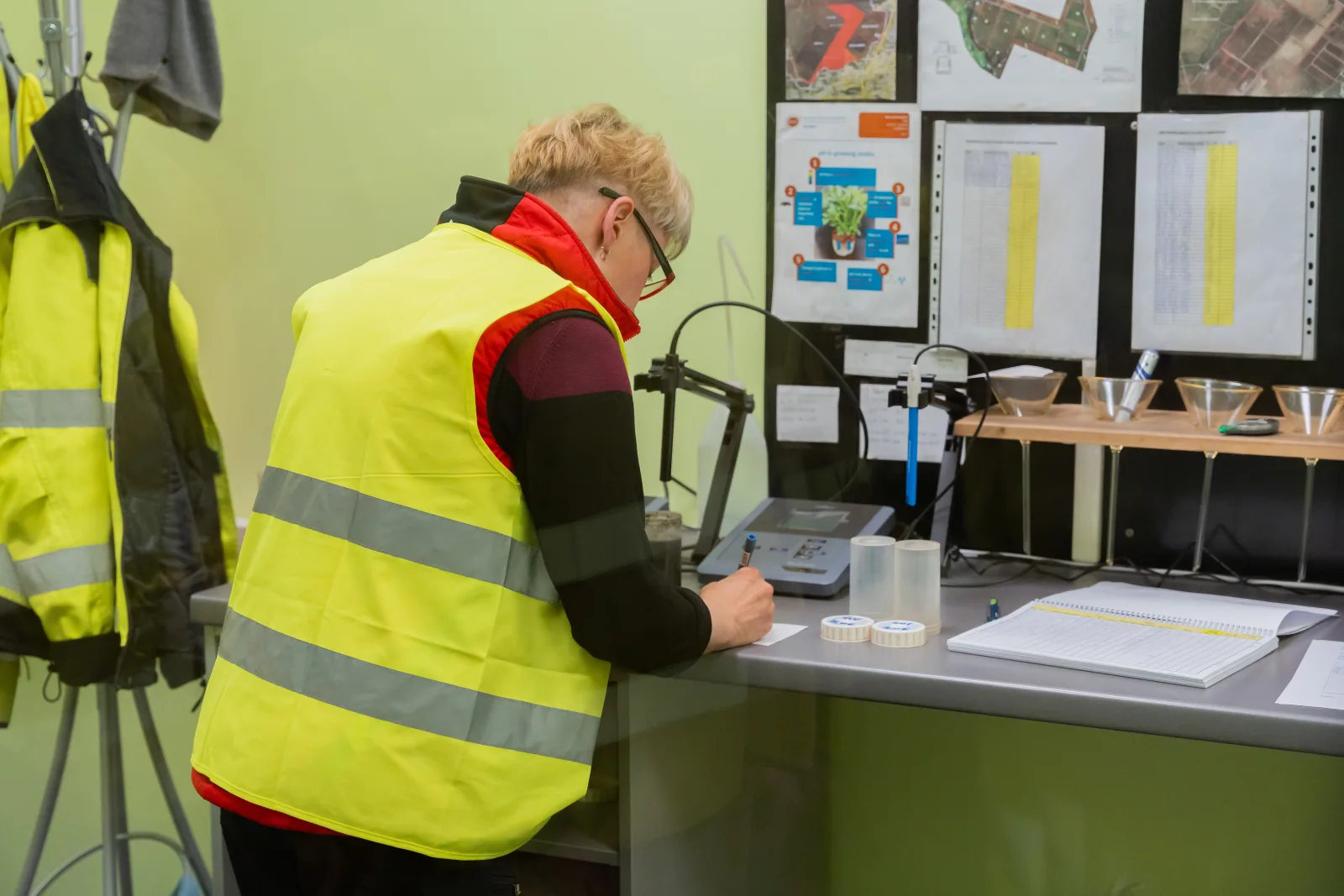
Record filling behavior, first wetting, irrigation distribution, drainage, dry-down, root development, pH, EC, crop uniformity and any labor required to correct wet or dry areas.
For longer-cycle programs, continue the trial long enough to evaluate structural stability. A mix can look suitable during establishment and still become difficult to manage after repeated irrigation or root development.
The commercial question is not only whether plants survive. It is whether the peat substrate makes crop performance and daily management more predictable at scale.
Where ASB Professional fits:
ASB Professional supports professional growing media programs through raw peat bases, seed and propagation mixes, potting mixes, organic directions, blueberry products and regional grower ranges.
The team can help buyers define whether they need a base grower mix, peat and perlite substrate, fine propagation mix, more open high-porosity direction, crop-specific finished medium or raw peat for local formulation.
Product selection should begin with the crop and production system. Structure, components, packaging, documentation and supply planning can then be aligned around that need.
Practical takeaway:
Peat substrates are professional growing media systems, not simply peat with added ingredients. Their performance comes from the interaction between peat structure, pore distribution, added components, chemical adjustment, crop use and irrigation.
The strongest buying process is clear: define the production need, identify the correct product level, understand why each component is present, run a realistic trial and align technical expectations with packaging and delivery planning.
ASB Professional can help review crop use, structure, components, product type, trial planning and supply requirements. Contact the ASB Professional team to discuss a peat substrate or professional growing media direction for your program.
Recommended ASB products
These products are commonly evaluated with the strategy covered in this article.
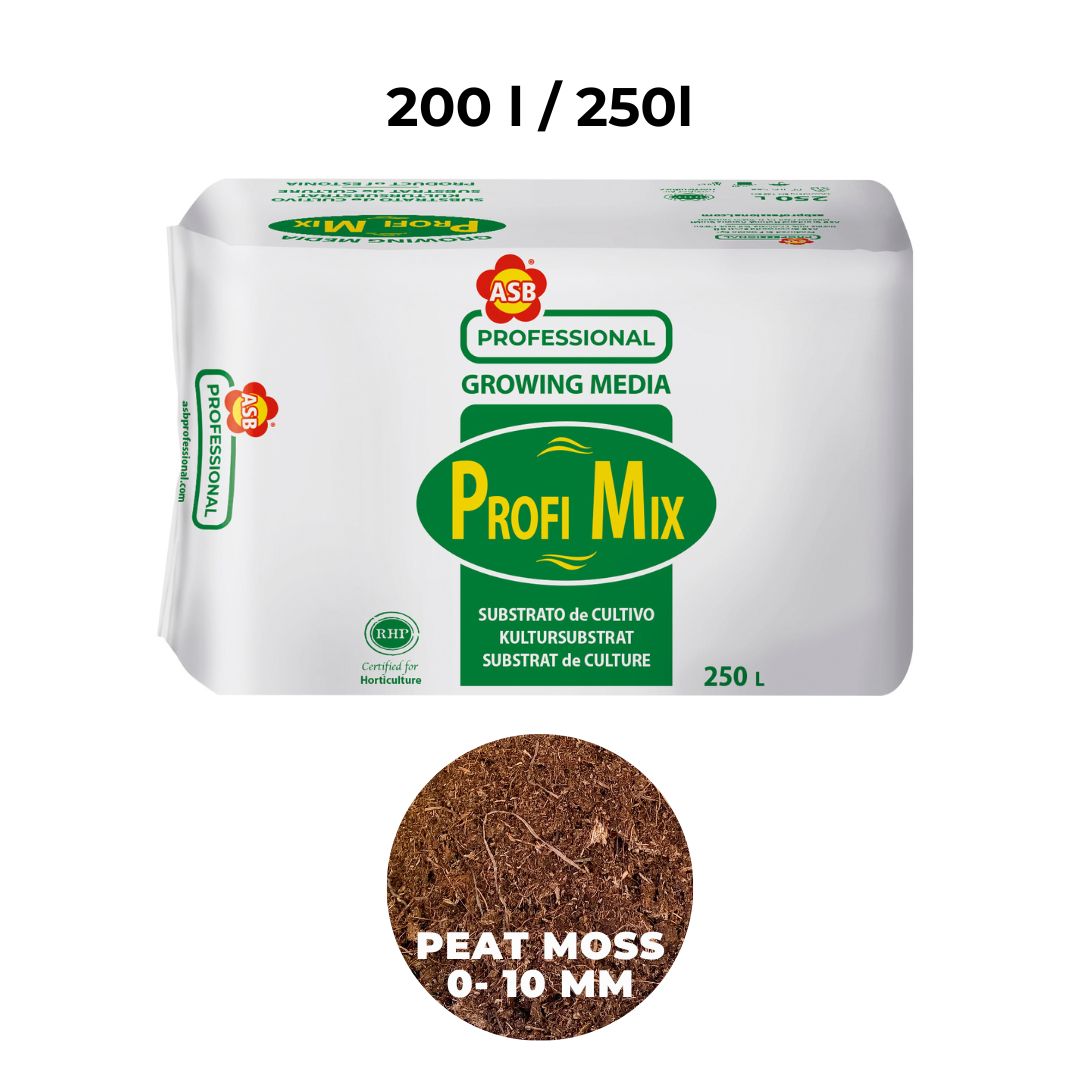
ASB Professional Substrate WP010
A defined peat base for substrate manufacturers and growers who blend locally and need control over the final formulation.
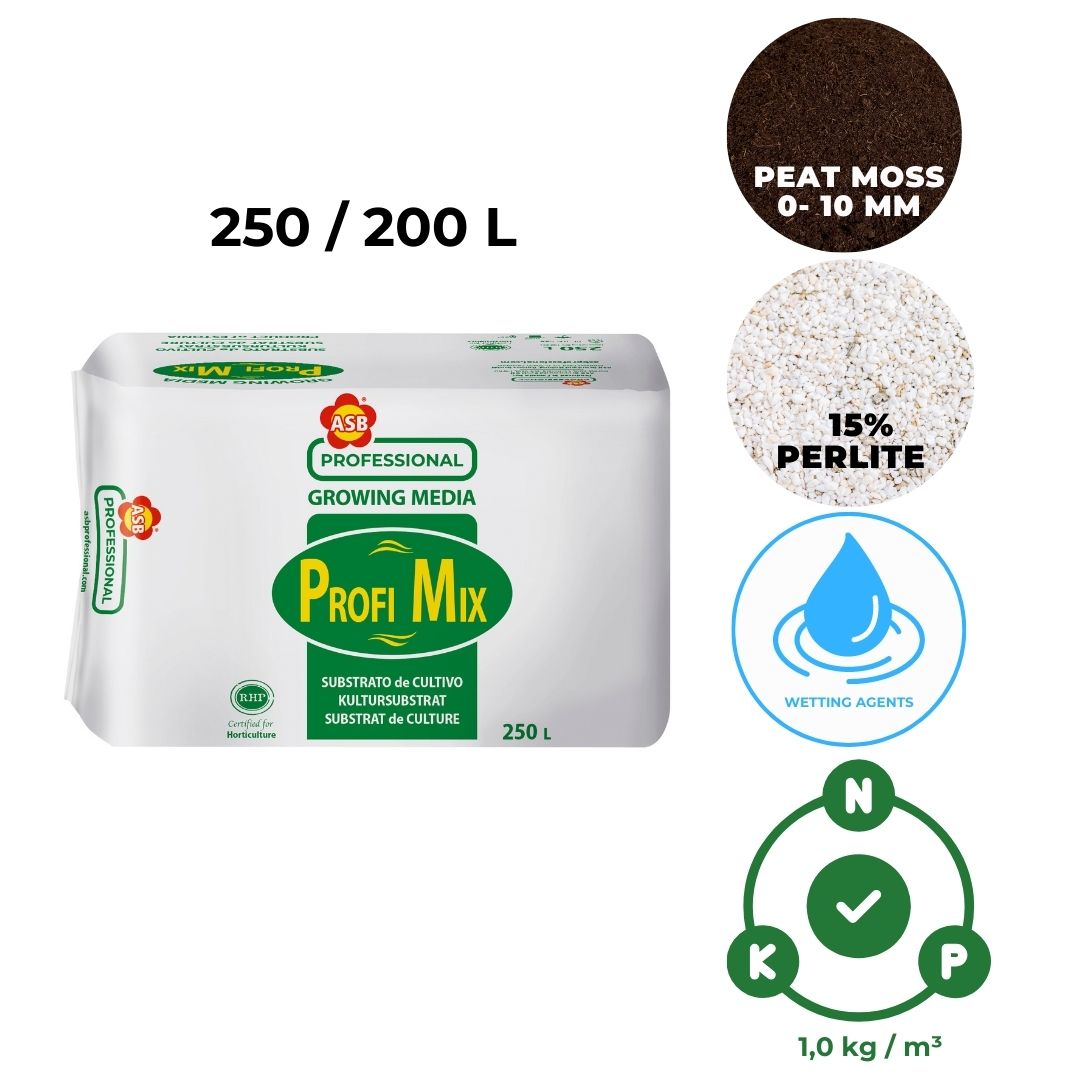
ASB Professional Substrate 0-10 Perlite
A propagation direction where fine structure, uniform filling, moisture distribution and aeration need to support early root development.
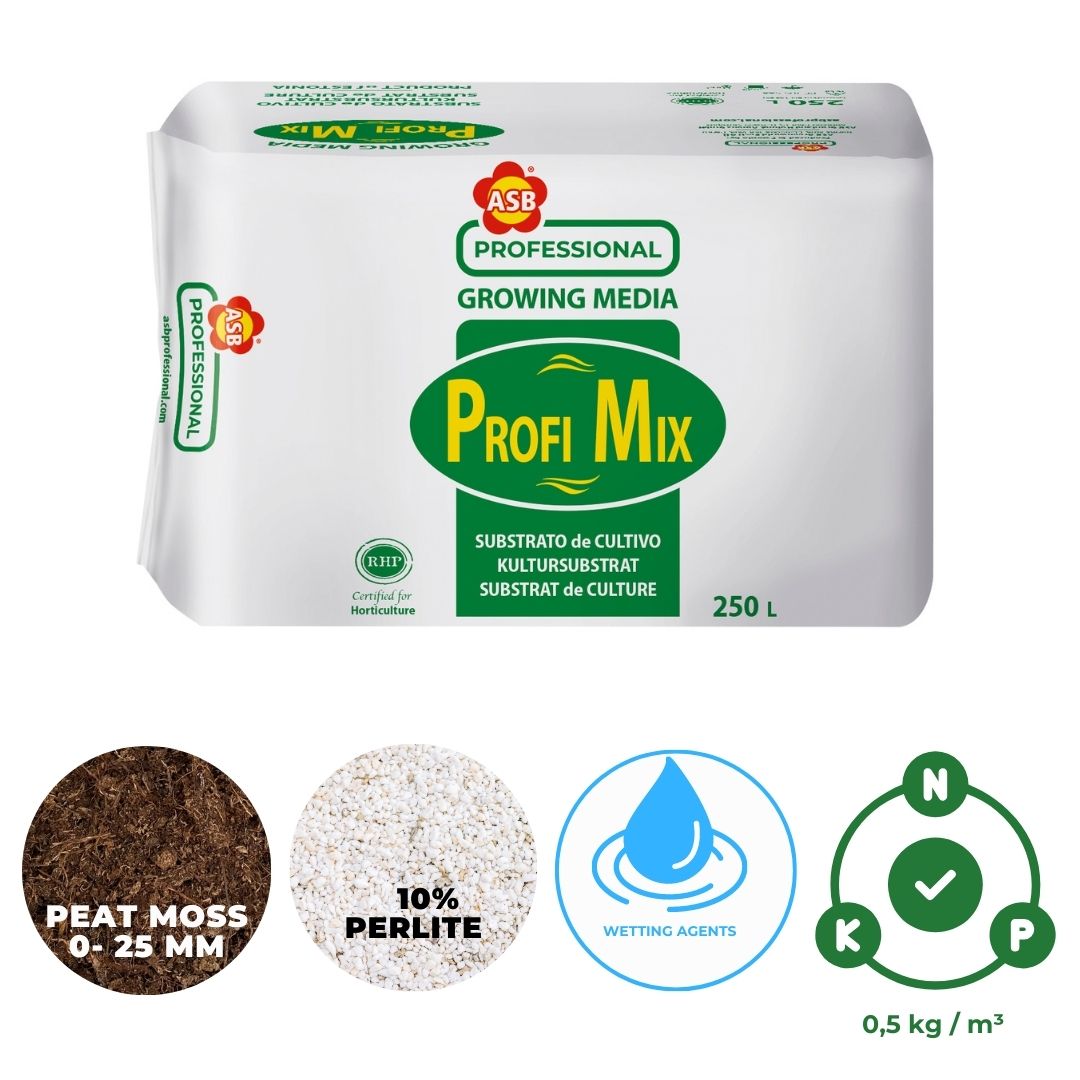
ASB Professional Substrate Mix 0-25 Perlite
A peat-based potting mix direction for commercial programs that need a more open root zone and controlled drainage.
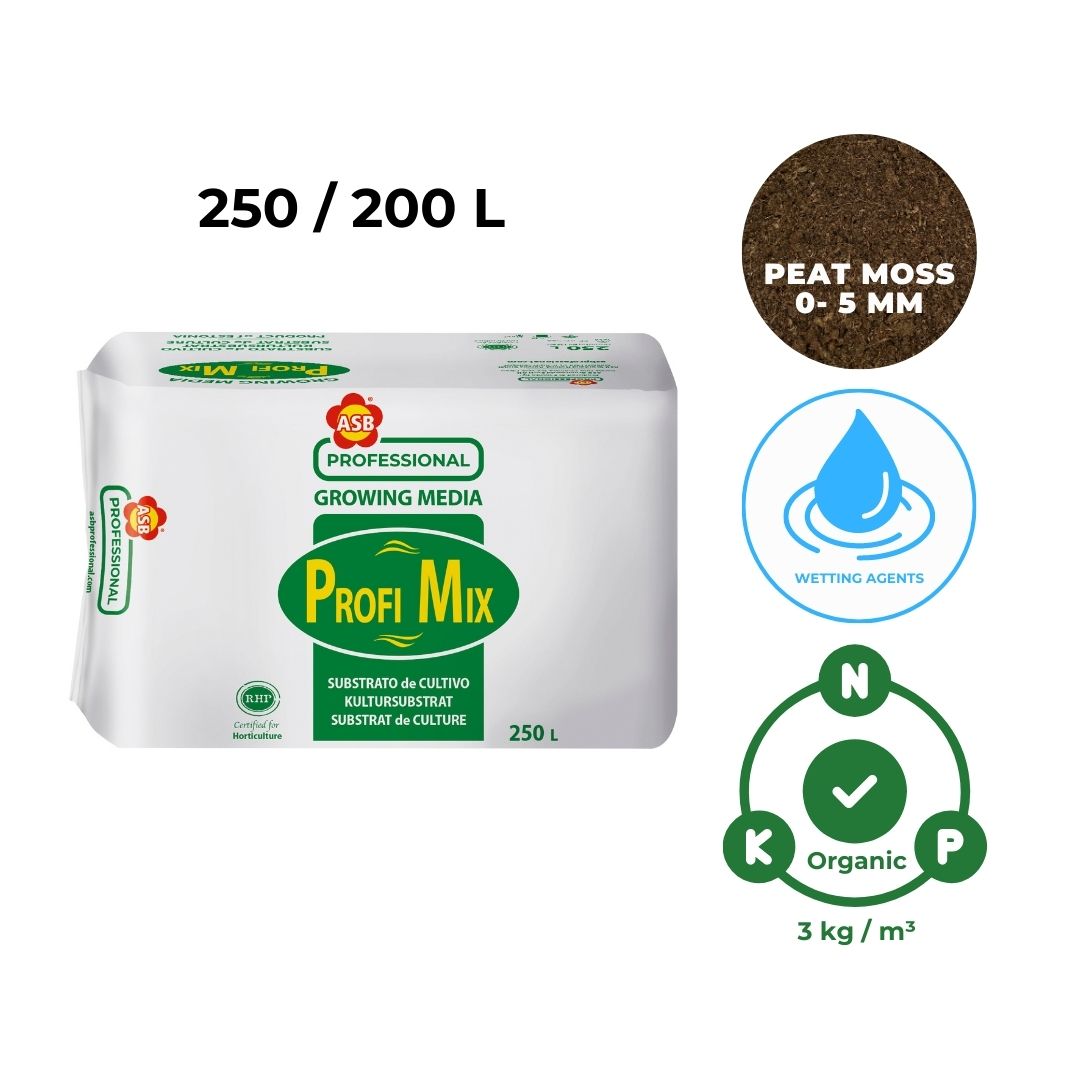
ASB Professional Substrate 05 pH
A finished growing media direction for programs where organic positioning, nutrient release and physical performance must be considered together.
How professional peat substrate categories differ
| Criteria | Substrate category | Main production purpose |
|---|---|---|
| Base grower mix | A peat-based foundation with limited or no aggregate, intended for further adjustment or a defined general-use program. | Useful when the grower or substrate manufacturer needs formulation flexibility and understands what will be added before use. |
| Peat and perlite grower mix | Peat combined with a lightweight porous mineral component. | Used where a more open physical structure, drainage support and air capacity are important for the crop and irrigation system. |
| Peat and wood fiber mix | Peat combined with a fibrous component that changes pore distribution, handling and dry-down behavior. | Useful when the formulation target includes a more open structure, lower bulk density or a reduced peat share, provided irrigation is adapted to the blend. |
| Seed and plug mix | Fine and uniform growing media for trays, small cells, seeds, cuttings and young plants. | Prioritizes consistent filling, close root contact, predictable first wetting and controlled moisture around small root volumes. |
| High-porosity substrate | A more open mix designed to maintain a larger air volume after irrigation. | Relevant for crops, containers and irrigation programs that need rapid drainage, oxygen recovery and structural stability. |
| Organic, coir, bark or CRF mix | A formulation shaped by certification, alternative constituents, crop duration or nutrient-release requirements. | Must be evaluated as a complete system because physical behavior, nutrient availability and irrigation response can all change. |
FAQ
What is a peat substrate?
A peat substrate is a growing medium based partly or mainly on peat that has been selected, screened, structured, adjusted or blended for a defined horticultural use. It may be a finished growing medium or a base mix intended for further formulation.
What is the difference between peat moss and a peat substrate?
Peat moss is a raw material. A peat substrate is a product direction created from peat and, where required, other components, pH adjustment, fertilizer, wetting agents or additives to meet defined physical, chemical and handling requirements.
Why is perlite added to peat substrates?
Perlite is a lightweight porous component commonly used to create a more open structure and support air capacity and drainage. Its practical effect depends on particle size, inclusion rate, peat structure, compaction, container geometry and irrigation.
What is a high-porosity substrate?
A high-porosity substrate is formulated to retain a larger volume of pore space for air and water. In commercial use, the important question is how much air remains after irrigation and whether the mix still provides enough available water for the crop.
Can wood fiber, coir or bark be mixed with peat?
Yes. Wood fiber, coir and bark can be used as substrate constituents, but each changes the mix differently. The final blend should be tested for structure, water behavior, pH, EC, nutrient management, crop duration and irrigation compatibility.
What is a base grower mix?
A base grower mix is a peat-based foundation that may contain limited adjustment and is intended either for a defined general use or for further blending. Buyers should confirm whether it is ready to use or still requires fertilizer, aggregate, pH adjustment or another formulation step.
How should commercial growers test a peat substrate?
The trial should use the intended crop, container, filling method, irrigation system, water source, fertilizer program, climate and production duration. Track wetting, drainage, dry-down, root development, pH, EC, crop uniformity and any additional labor needed to manage the mix.
Need help selecting a peat substrate or professional growing medium?
ASB Professional can help review crop use, peat structure, components, packaging, documentation, trial planning and whether your program needs a finished growing medium or a peat base for local formulation.
This article is part of the ASB Professional Blog and highlights topics across events, sustainability, and technical growing media expertise. ASB Greenworld Eesti is listed as a member of the Estonian Peat Association (Eesti Turbaliit).
It helps customers and partners follow company developments, market activity, and product-related topics.
ASB Professional Editorial Team