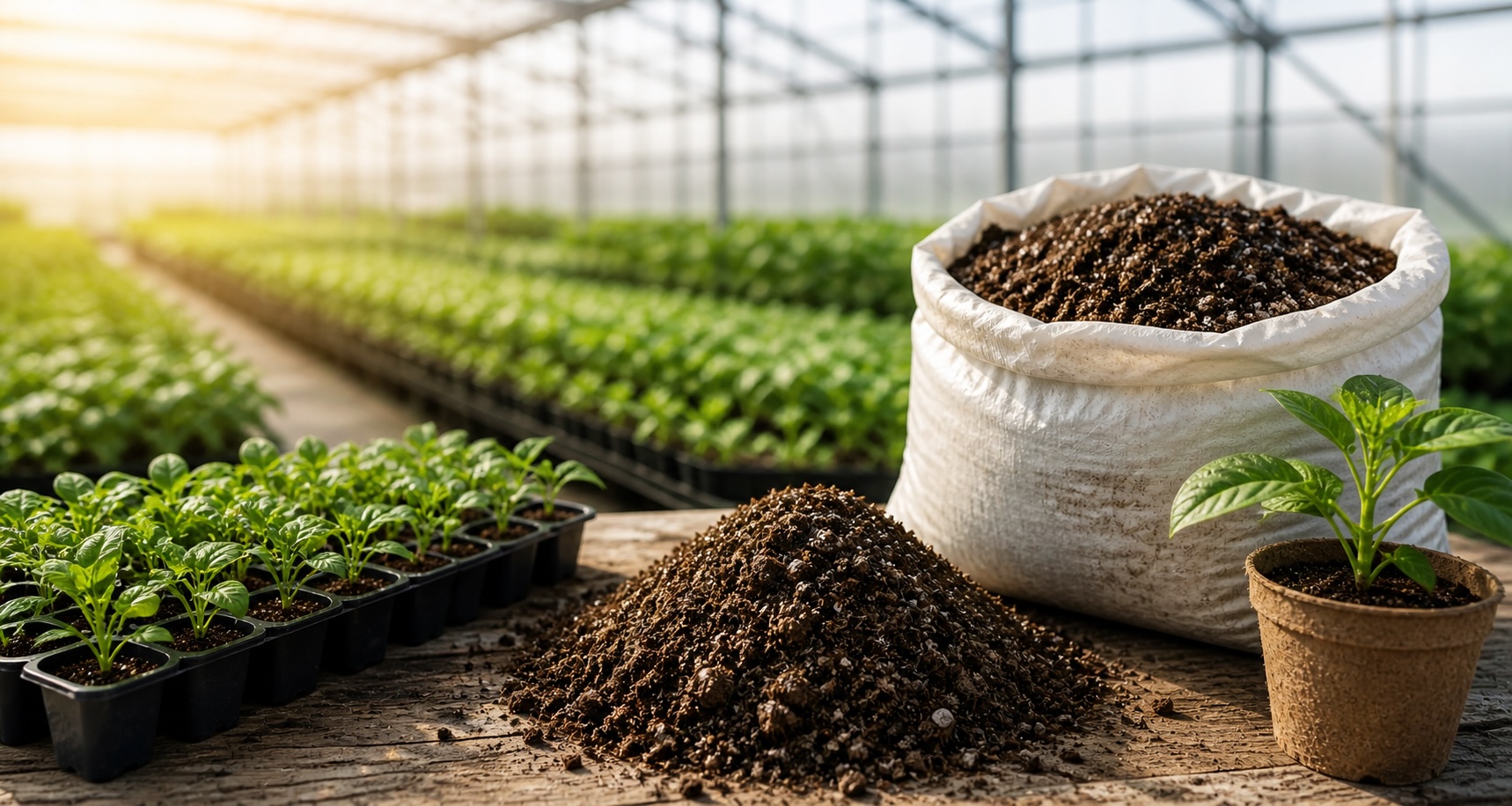
Organic growing mixes need to support both crop performance and commercial requirements. Professional buyers should compare structure, pH, moisture behavior, crop fit, documentation, packaging, and supplier reliability before committing to a full program.
- Organic growing mixes should be evaluated on crop performance, not only on whether they carry an organic positioning.
- Professional buyers should check structure, pH range, moisture behavior, starter nutrition strategy, and documentation before larger commitments.
- Organic herb and leafy green programs often need predictable water behavior, clean handling, and repeatable batch quality.
- Packaging and supply planning matter because organic crop schedules can be difficult to correct once production is underway.
- A controlled trial should measure crop uniformity, root development, irrigation correction, reject rate, and fit with the filling workflow.
Why this buying decision matters:
Organic growing mixes are often discussed as a product category, but professional buyers need to evaluate them as part of a crop program. The substrate must support plant performance, production workflow, internal quality requirements, and delivery timing.
For larger companies, the risk is not only choosing the wrong bag. The risk is committing to a substrate that creates uneven moisture, unstable early growth, extra irrigation correction, poor filling behavior, or documentation gaps during the season.
A useful decision rule:
Treat organic growing mixes like a production system input, not a marketing label. The right mix should support the crop, fit the container and filling process, match the irrigation strategy, and be supplied with the documentation your team needs.
If the crop is sensitive, the schedule is tight, or the program is scaled across many batches, a small inconsistency in substrate behavior can become a large operational problem.
7 checks before buying organic growing mixes:
1. Crop fit:
Start with the crop. Organic herbs, leafy greens, and specialty greenhouse crops do not all respond the same way to structure, moisture, nutrition, and pH.
A professional trial should compare crop uniformity, root development, color, compactness, and transplant or harvest readiness, not only whether the plants survive.
2. Structure and fill behavior:
Structure affects how the mix moves through the filling line, how evenly it settles in containers, and how consistently it holds water after irrigation.
For larger operations, fill behavior is a commercial issue. A technically acceptable substrate can still be expensive if it slows the line, creates uneven pots, or increases cleanup and correction work.
3. Moisture behavior:
Organic programs still need predictable water control. The mix should re-wet consistently, distribute moisture evenly, and avoid creating wet or dry zones that split crop development.
The trial should include repeated irrigation cycles. One good watering event does not prove that the mix will behave consistently through the crop program.
4. pH and nutrition strategy:
Organic growing mixes need a stable starting point. Buyers should confirm the pH range, water quality fit, and how nutrition will be managed during the crop cycle.
Too little nutrient support can slow early development. Too much or poorly matched support can create crop stress. The right answer depends on crop type, production length, irrigation water, and the grower's nutrition program.
5. Documentation and internal approval:
For professional buyers, documentation is part of the product. Before ordering at scale, confirm what product files, specifications, and quality documents are available.
This is especially important when procurement, growing, quality, and sales teams all need confidence that the substrate fits the intended organic or lower-input program.
6. Packaging and handling:
Packaging should match the operation. Bag size, bale format, pallet configuration, storage behavior, and handling workflow all influence labor and production rhythm.
For export programs, packaging also affects container planning, unloading, storage, and how consistently the substrate reaches the production line.
7. Supplier reliability:
The supplier should be able to support repeatable quality, seasonal delivery windows, product questions, and escalation if something changes during production.
Organic growing mixes are not a one-time purchase for larger programs. They become part of annual crop planning, so supply reliability matters as much as product description.
How to run a practical trial:
Test the organic mix under real production conditions. Use the same containers, filling equipment, irrigation water, fertilizer approach, crop timing, and greenhouse climate that will be used after purchase.
Score the trial on fill consistency, moisture uniformity, crop uniformity, root development, irrigation correction, reject rate, labor impact, and documentation readiness.
Procurement should not review the trial alone. Growing, operations, and quality teams should all evaluate whether the mix reduces risk or creates new operational work.
Common mistakes:
One common mistake is choosing an organic mix based only on positioning. Organic wording does not replace crop performance, handling consistency, or supply reliability.
Another mistake is skipping the comparison with the current substrate. Without a reference point, it is difficult to know whether changes in growth, water behavior, or labor correction are caused by the mix or by normal crop variation.
A third mistake is waiting until peak season to test. Larger programs should trial and approve organic growing mixes before purchasing pressure makes the decision harder.
Practical buyer checklist:
Before buying, ask: Does the mix fit the crop? Does it fill consistently? Does it re-wet predictably? Is pH aligned with the program? Is documentation available? Does packaging fit the line? Can the supplier support repeatable delivery?
The best organic growing mix is not only the one that matches a category name. It is the one your team can run consistently while supporting crop quality, reducing avoidable correction work, and fitting the commercial buying process.
Recommended ASB products
These products are commonly evaluated with the strategy covered in this article.
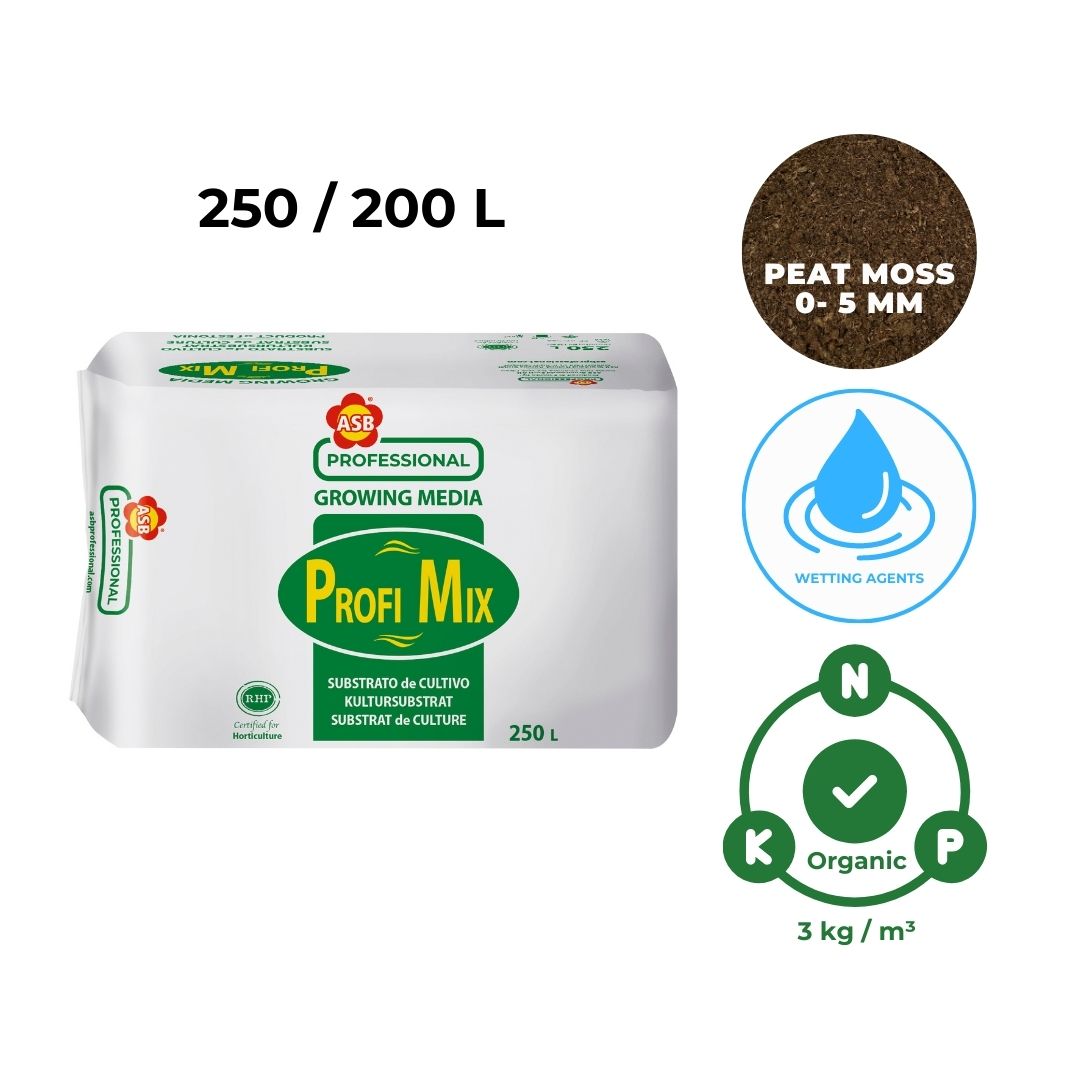
ASB Professional Substrate 05 pH
A peat-based organic substrate direction for herbs, leafy greens, and lower-input professional growing programs.
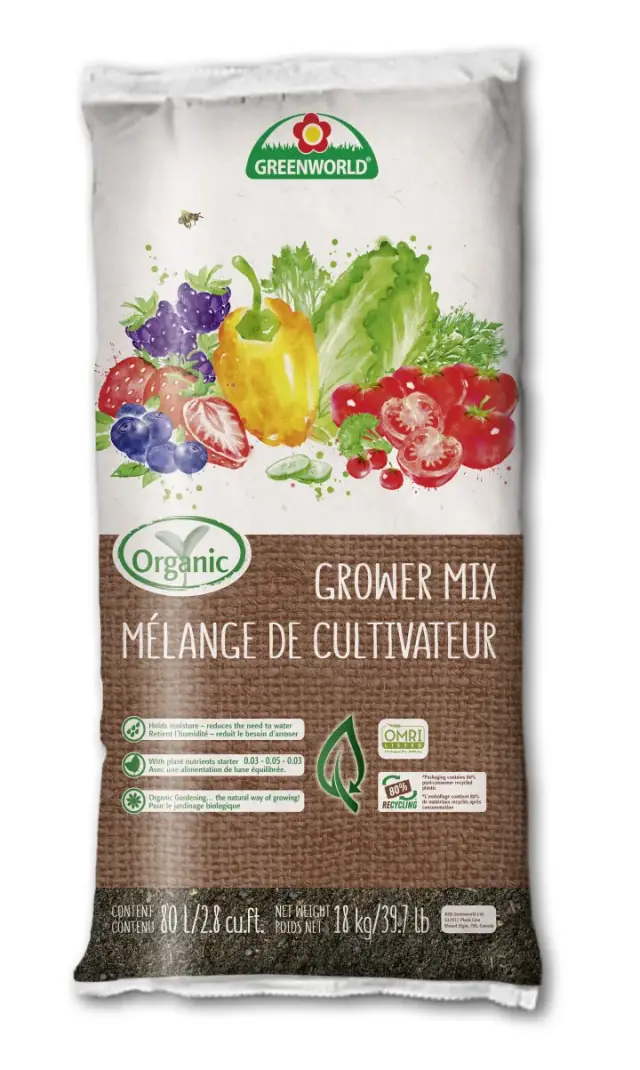
ASB Organic Grower Mix
A practical comparison point for herb, leafy green, and specialty greenhouse programs in USA and Canada.
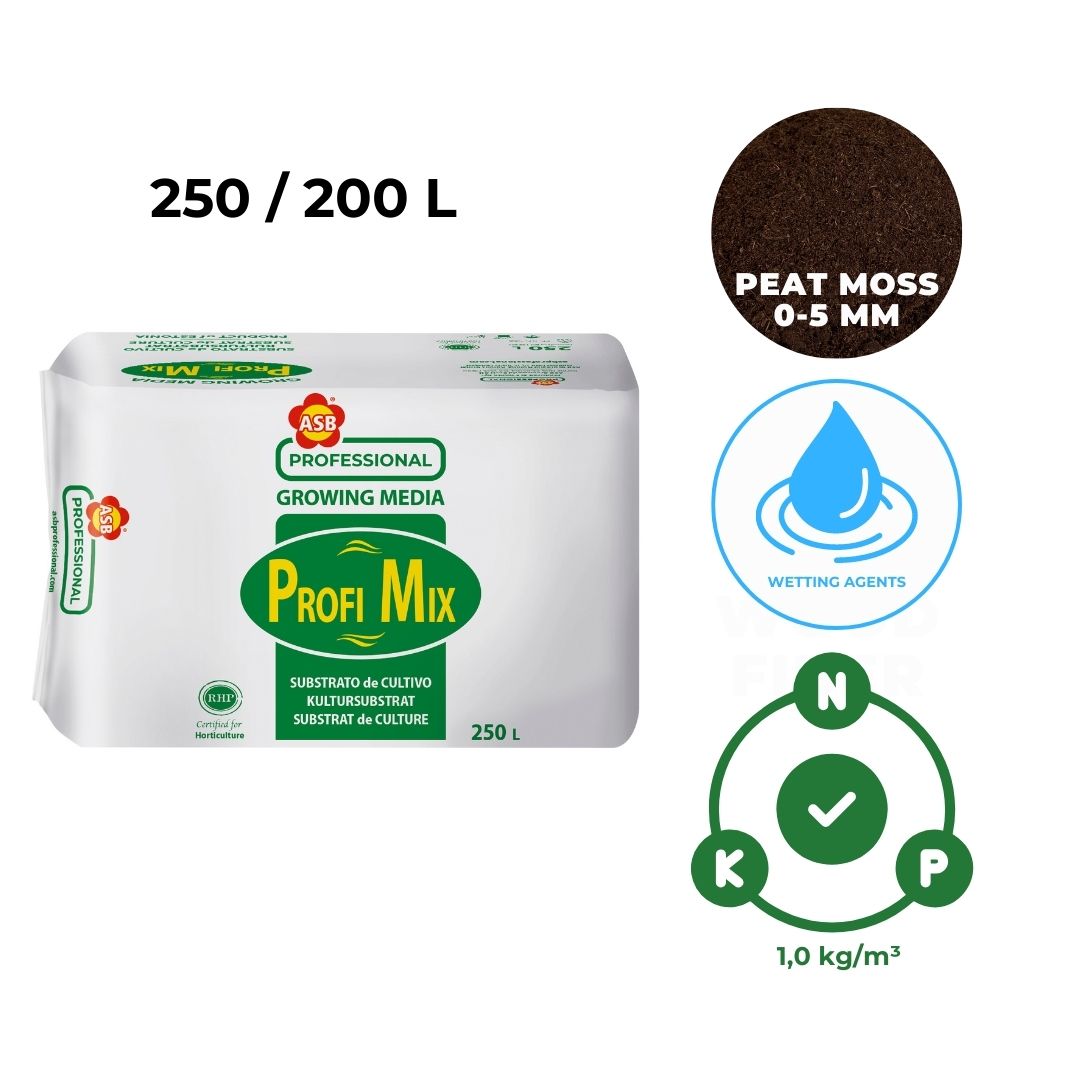
ASB Professional Substrate 0-5 WA NPK
Useful as a structure comparison when organic programs also need young-plant or fine-cell workflow planning.
Organic growing mix evaluation matrix
| Criteria | What buyers often ask | What to verify before buying |
|---|---|---|
| Crop fit | Will it work for herbs, leafy greens, or other lower-input crops? | Run a crop-specific trial and measure uniformity, root development, and reject rate. |
| Structure | Is the particle size suitable for the container and filling line? | Check fill consistency, compaction, moisture distribution, and handling after storage. |
| pH and nutrition | Does the mix give the crop a stable starting point? | Confirm target pH, water quality fit, and how nutrition will be managed during production. |
| Documentation | Can the supplier support the organic buying process? | Request product files, specifications, and any documentation needed by your internal quality process. |
| Commercial readiness | Can the mix be supplied at the scale and timing required? | Confirm packaging, lead times, delivery windows, and escalation contacts before the season starts. |
FAQ
Are organic growing mixes only about certification?
No. Documentation matters, but professional buyers also need to evaluate crop fit, structure, moisture behavior, pH, packaging, and repeatable supply performance.
Which crops are organic growing mixes often evaluated for?
They are commonly considered for organic herbs, leafy greens, specialty crops, and lower-input greenhouse programs where the substrate needs to support both crop quality and production workflow.
What should larger buyers test before switching to an organic mix?
Test filling behavior, moisture distribution, crop uniformity, root development, irrigation correction, reject rate, and whether the packaging and delivery plan fit the production schedule.
Why compare an organic mix with a conventional reference substrate?
A reference substrate helps the team understand what changes in water behavior, structure, crop response, and labor correction when moving to an organic program.
Planning an organic growing media program?
The ASB Professional Worldwide team can help compare organic mix requirements by crop, container format, documentation needs, packaging, and export planning.
This article is part of the ASB Professional Blog and highlights topics across events, sustainability, and technical growing media expertise. ASB Greenworld Eesti is listed as a member of the Estonian Peat Association (Eesti Turbaliit).
It helps customers and partners follow company developments, market activity, and product-related topics.
ASB Professional Editorial Team