Commercial blueberry production needs a growing medium that supports acidic crop conditions, high root-zone oxygen, controlled moisture, stable structure, and an irrigation strategy that fits the container and climate. The right blueberry substrate depends on peat fraction, crop stage, water quality, fertigation, container size, and whether the buyer needs a ready-to-use mix or an acidic base for custom formulation.
- A substrate for blueberries should support acidic crop conditions, but the starting pH alone does not guarantee stable performance through the crop cycle.
- Blueberry roots need moisture and oxygen at the same time, so water-holding capacity, drainage, and air-filled porosity must be balanced around the irrigation strategy.
- Fine peat structures can support nursery work and smaller containers, while more open structures can be useful for larger containers, longer production cycles, and custom berry formulations.
- Irrigation water quality can change root-zone pH and salinity, which makes water testing and ongoing pH and EC monitoring part of substrate management.
- Commercial trials should use the real container, irrigation system, cultivar, climate, and crop duration before a blueberry growing medium is scaled across a larger program.
- For commercial blueberry production, the preferred compositions are 0-40 mm white peat, 85% 0-40 mm white peat with 15% wood fiber, or 10-40 mm white peat, all at pH 3.5-4.2. Fine 0-5 mm and 0-10 mm options are for blueberry seedlings and young plants when the finished composition includes a wetting agent.
Why blueberry substrate needs its own production strategy:
A substrate for blueberries cannot be selected only by looking for the word acidic on a product sheet. Blueberries have a fine, shallow, and sensitive root system. In commercial production, the root zone has to provide low-pH crop conditions, useful moisture, rapid oxygen recovery after irrigation, and enough structural stability to support the plant through the planned production period.
That makes blueberry growing media a system decision. Substrate structure, irrigation water, fertigation, container size, drainage, climate, cultivar, and crop duration all influence one another. A material that performs well in a nursery pot may not be the right direction for a larger container kept in production for several seasons.
For growers and procurement teams, the useful question is not simply, 'Is this peat acidic?' The better question is, 'Will this root zone remain manageable under our irrigation water, container, climate, and crop cycle?'
pH is the starting point, not the whole answer:
Blueberries are acid-loving crops, and root-zone pH affects nutrient availability and plant performance. However, the pH printed on a raw material or finished substrate specification is only the starting condition. It does not guarantee that the same pH will remain stable after months of irrigation and fertigation.
Irrigation water can move root-zone chemistry over time. Water alkalinity and bicarbonates may push pH upward. Fertilizer choice, acidification, drainage percentage, nutrient uptake, and amendments can also change the final result. This is why professional blueberry growers should review substrate pH together with water analysis and fertigation planning.
The distinction between a naturally acidic peat base and a finished blueberry substrate is also important. A peat base may provide the low-pH raw material direction for a custom mix. A finished growing medium should be evaluated as a complete formulation with a defined use, structure, pH direction, handling expectation, and irrigation strategy.
ASB Professional offers growing mixes for blueberries based on naturally acidic Estonian peat in several structures. These products give growers and substrate blenders different starting points, but the correct choice still depends on the production system.
Structure controls both water and oxygen:
Blueberry roots need continuous access to water, but they also need oxygen. These requirements can conflict when the substrate is too compact, the container drains poorly, or irrigation events are too large for the available air space.
A finer substrate structure usually creates closer root contact and more uniform filling in smaller containers. It can support nursery work, propagation-oriented programs, and custom formulations where controlled moisture distribution is important. The risk is that a fine structure can lose air space when it is compressed, overfilled, or irrigated without enough drainage.
A more open structure can improve drainage and oxygen availability in larger containers or longer crop cycles. It may also create a wider margin after irrigation. The trade-off is that open materials can dry differently and may need more precise irrigation frequency, emitter placement, and monitoring.
This is why structure should never be selected separately from irrigation. The same 0-25 mm peat base may behave differently in a shallow nursery container, a tall production pot, a fabric container, or a large bag system. Container geometry changes the balance between water-filled and air-filled pore space.
For buyers, the key question is not simply fine or coarse. It is whether the fraction fits the container, compaction level, irrigation method, climate, crop duration, and any planned blending step.
Water management begins with the substrate choice:
Commercial blueberry systems often rely on frequent drip irrigation because the crop has a sensitive root system and container volumes can dry quickly. Frequent irrigation can work well, but only when application volume, distribution uniformity, drainage, and root-zone air recovery are controlled.
Large irrigation events may keep the lower part of a container saturated for too long. Very small events may wet only part of the root zone if emitter placement or substrate wettability is uneven. In hot conditions, containers at the edge of a block may dry faster than those in protected areas. These are irrigation problems, but substrate structure can increase or reduce their effect.
A strong blueberry growing medium should wet predictably, distribute moisture through the intended root volume, drain without remaining saturated, and re-wet without forcing the grower into constant correction work.
The practical target is not maximum water holding. It is useful water combined with enough air after irrigation. A substrate that holds a large volume of water but recovers oxygen too slowly may be a poor fit. A very open substrate that dries too fast may increase irrigation demand and management risk.
This is also why irrigation scheduling should be based on the actual crop system rather than a fixed calendar. Container weight, drainage volume, substrate moisture sensors, climate data, plant stage, and visual root-zone checks can all help the grower understand whether irrigation is matching the substrate.
Irrigation water quality can change the crop result:
Water quality is part of blueberry substrate management. Commercial growers should know more than the water pH. Alkalinity, bicarbonates, electrical conductivity, sodium, chloride, boron, and other dissolved elements can affect long-term root-zone conditions.
A water source with high alkalinity may gradually raise substrate pH even when the original growing medium was acidic. Salts can accumulate when irrigation water, fertilizer concentration, and drainage are not balanced. Because blueberries can be sensitive to unsuitable water chemistry, a substrate decision made without water analysis leaves an important production variable unknown.
Before choosing a blueberry substrate, larger programs should review the water report with the technical team. The useful discussion includes source-water quality, planned fertilizer, acidification strategy, target drainage, monitoring frequency, and the expected change in root-zone pH and EC during the season.
If your team needs help connecting an acidic peat base with the intended production workflow, contact ASB Professional. The earlier the water and substrate discussion begins, the easier it is to plan a meaningful trial.
Choosing the right structure for the crop stage:
Different blueberry programs need different physical starting points. A nursery producing young plants in smaller containers may prioritize fine structure, uniform fill, close root contact, and predictable first wetting. A farm moving established plants into larger containers may prioritize a more open root zone, drainage, and structural stability through a longer cycle.
The ASB Blueberry Peat Base WP05 uses a 0-5 mm structure and a naturally acidic pH range of 3.5-4.2. It is intended for blueberry seedlings and young plants, and the finished composition must include a wetting agent.
The ASB Blueberry Peat Base WP010 uses a 0-10 mm structure with the same naturally acidic pH range. It is intended for blueberry seedlings and young plants, and the finished composition must include a wetting agent.
For commercial blueberry production, the preferred options are 0-40 mm white peat, 85% 0-40 mm white peat with 15% wood fiber, or 10-40 mm white peat. All three preferred compositions use a final pH of 3.5-4.2.
These are peat-base directions, not a claim that one fraction is universally best. The correct structure depends on what the buyer will do next: use the material as supplied, blend it with other components, adjust it for a regional program, or formulate a finished substrate for a defined container system.
Raw acidic peat base versus finished growing medium:
A common purchasing mistake is comparing a raw peat base with a finished blueberry substrate as if they are interchangeable. They serve different buyers and require different levels of technical preparation.
A substrate manufacturer may want naturally acidic peat with a defined fraction so it can create a local formula using bark, wood fiber, coir, perlite, fertilizer, wetting agents, or other components. In this case, the peat is part of the formulation process.
A grower who does not blend internally may need a finished growing medium with a clearly defined specification and use direction. That product should be reviewed for pH, EC, physical structure, wetting behavior, nutrient program, packaging, storage, and compatibility with the irrigation system.
Neither option is automatically better. The important point is to identify which product type the production team actually needs before price, packaging, or volume comparisons begin.
How to run a useful commercial substrate trial:
A blueberry substrate trial should reproduce the real production system as closely as possible. A small test in a different container or with a different water source may create a result that does not transfer to commercial scale.
Use the planned cultivar, plant age, container type, container size, emitter setup, irrigation water, fertilizer program, climate conditions, and production duration. Include the same filling and compaction method that will be used across the larger crop.
Record first-wetting behavior, irrigation distribution, drainage volume, dry-down timing, substrate pH, EC, root appearance, shoot growth, crop uniformity, and any labor needed to correct dry or saturated areas. For a long-cycle program, continue the trial long enough to see whether the physical structure remains usable over time.
A trial should also compare management effort. A substrate can support healthy plants but still be a weak commercial fit if it requires more irrigation corrections, more monitoring, or more labor than the existing production system can support.
The most useful trial question is: does this substrate make the blueberry crop more predictable under our real conditions?
What procurement, production, and technical teams should align:
Large blueberry programs usually involve more than the grower. Procurement compares commercial terms. Production manages filling and crop timing. Technical teams monitor pH, EC, irrigation, and plant performance. Logistics manages packaging, storage, lead times, and seasonal deliveries.
These teams should agree on the same product definition before ordering. The request should include the intended use, peat fraction, raw base or finished mix, target container, cultivar or crop stage, irrigation method, source-water analysis, expected volume, packaging format, storage conditions, documentation needs, and delivery window.
Quick buyer snapshot:
| Question | What to confirm |
|---|---|
| Product type | Raw acidic peat base or finished blueberry growing medium |
| Crop fit | Nursery plant, young container crop, or longer-cycle production |
| Water plan | Source-water quality, fertigation, drainage target, and pH control |
| Logistics | Packaging format, storage fit, lead time, and seasonal volume |
For international supply, export readiness also matters. Product structure has to arrive in usable condition. Packaging must fit handling and storage. Documents should support procurement and technical review. Delivery planning should begin before seasonal demand becomes urgent.
ASB Professional can support these discussions through its Worldwide blueberry product family, Estonian peat production background, product documentation, and international sales routing. Buyers can review the blueberry growing mixes category, compare the preferred commercial compositions or the WP05 and WP010 seedling options, and then contact the international team for product fit, volume, packaging, or trial questions.
How this connects with the wider growing media program:
Blueberry substrate is one crop-specific part of a wider professional growing media system. Buyers who want more background on peat origin and processing can read Baltic Peat Moss: How Origin and Processing Shape Growing Media Performance. That article explains why peat origin alone does not define the final substrate.
Growers comparing blueberry requirements with other greenhouse crops can also review Substrate for Vegetables: How Growing Media Supports Commercial Crop Performance. Vegetable and blueberry systems both need water-air balance, but their pH direction, crop duration, irrigation strategy, and root-zone priorities can be very different.
For propagation teams, the seed and propagation growing media range provides a separate direction for trays and young plants. For buyers who blend locally, the raw materials range helps separate base-material purchasing from finished crop-specific growing media.
These links matter because the correct product choice depends on the role the material will play. A blueberry peat base, a propagation substrate, a vegetable potting mix, and a raw peat product are connected, but they are not interchangeable.
Practical takeaway:
The right substrate for blueberries supports acidic crop conditions, moisture availability, root-zone oxygen, structural stability, and manageable irrigation through the complete production cycle.
Low pH is essential, but it is not enough by itself. Commercial performance comes from the interaction between peat fraction, container geometry, irrigation water, fertigation, drainage, climate, cultivar, and crop duration.
For professional buyers, the strongest process is clear: define the production system, test the water, choose the correct product type, run a realistic trial, monitor pH and EC, and align technical and logistics expectations before scaling.
ASB Professional can help review whether the program needs a preferred commercial blueberry composition, WP05 or WP010 for young plants, another finished growing medium direction, or an acidic peat base for local formulation. Contact us to discuss the crop system, structure, packaging, documentation, and supply plan.
Recommended ASB products
These products are commonly evaluated with the strategy covered in this article.
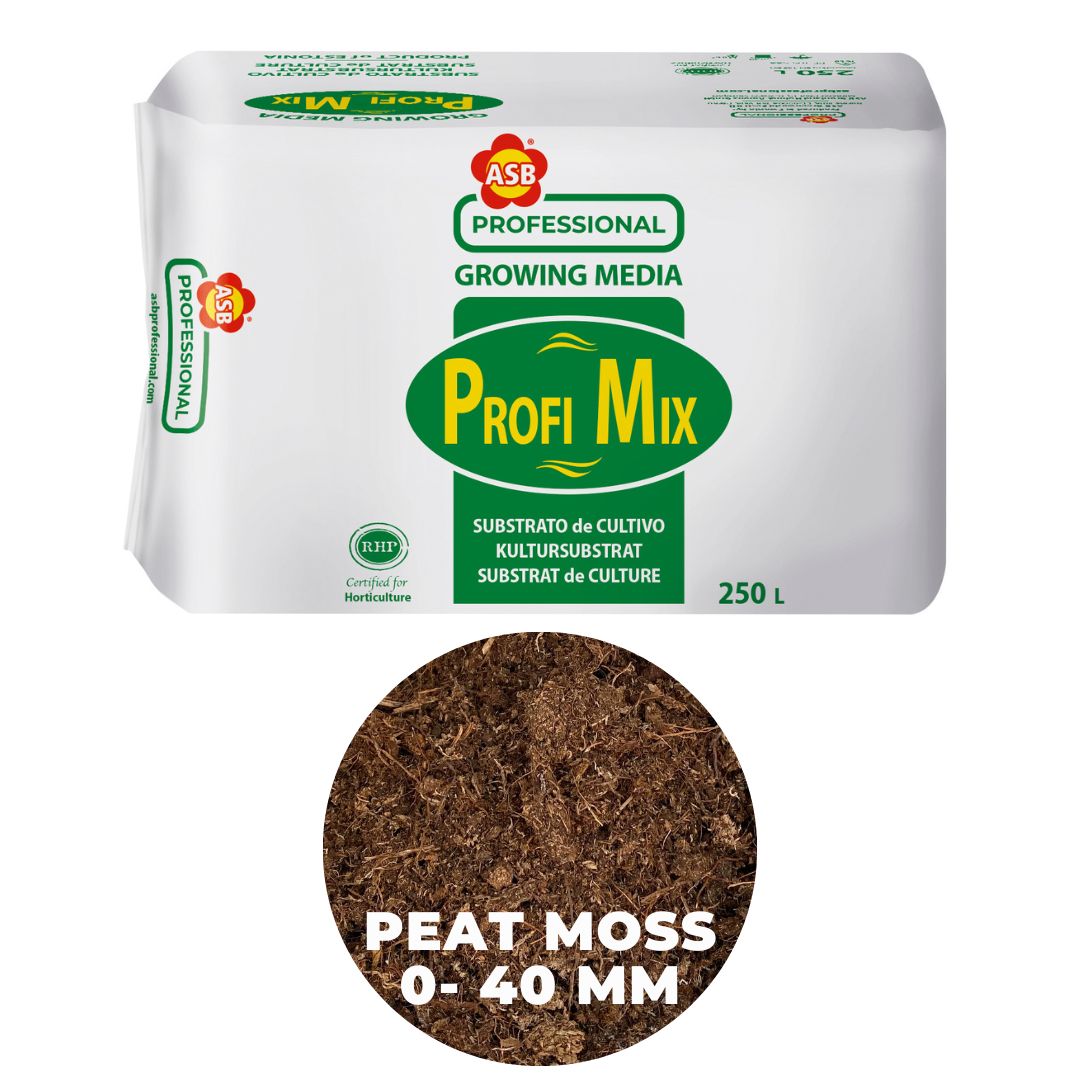
0-40 mm White Peat
A preferred commercial blueberry composition with a more open 0-40 mm white peat structure at pH 3.5-4.2.
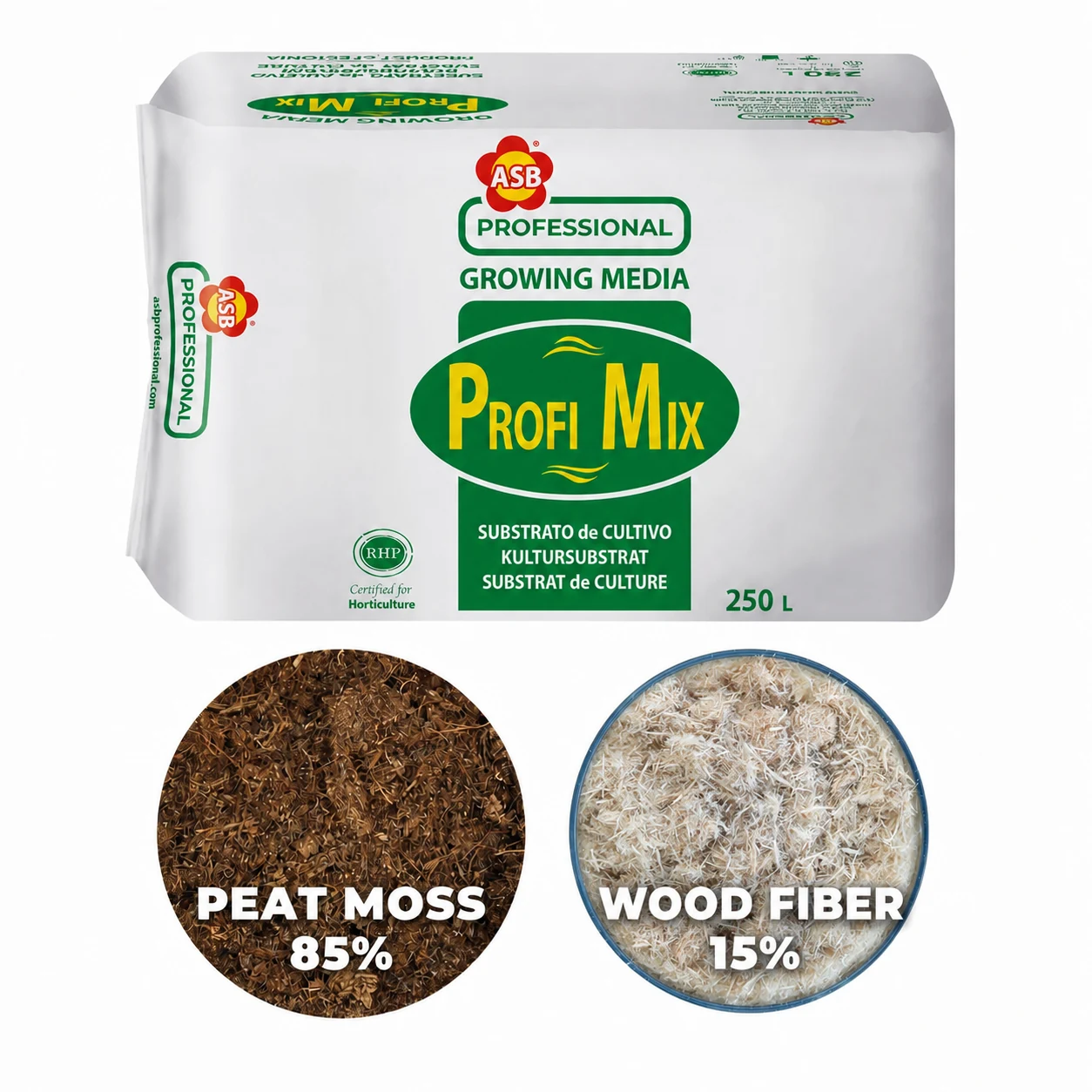
85% 0-40 mm White Peat + 15% Wood Fiber
A preferred 85% white peat and 15% wood fiber composition at pH 3.5-4.2.
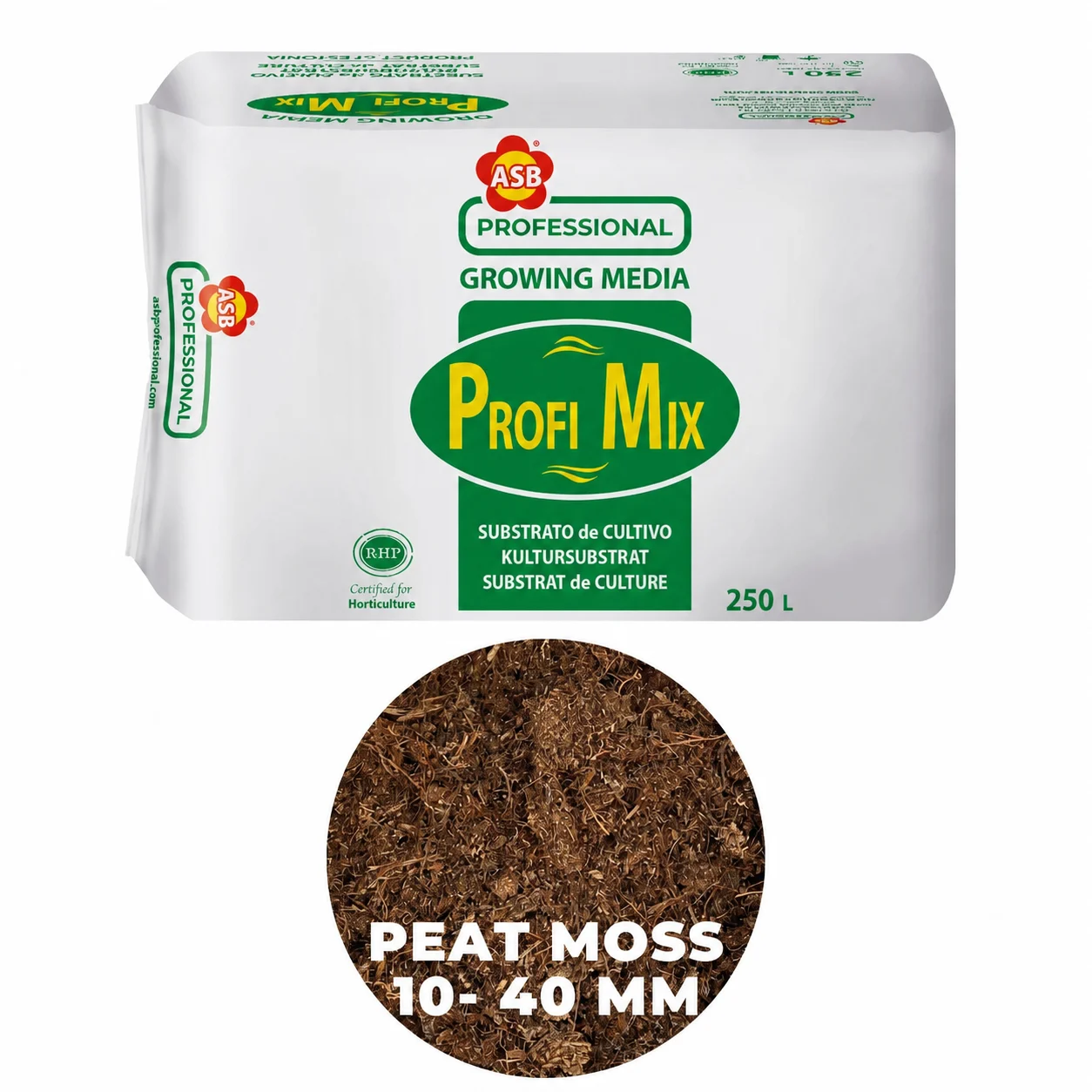
10-40 mm White Peat
A preferred coarser white peat composition for commercial blueberry production at pH 3.5-4.2.
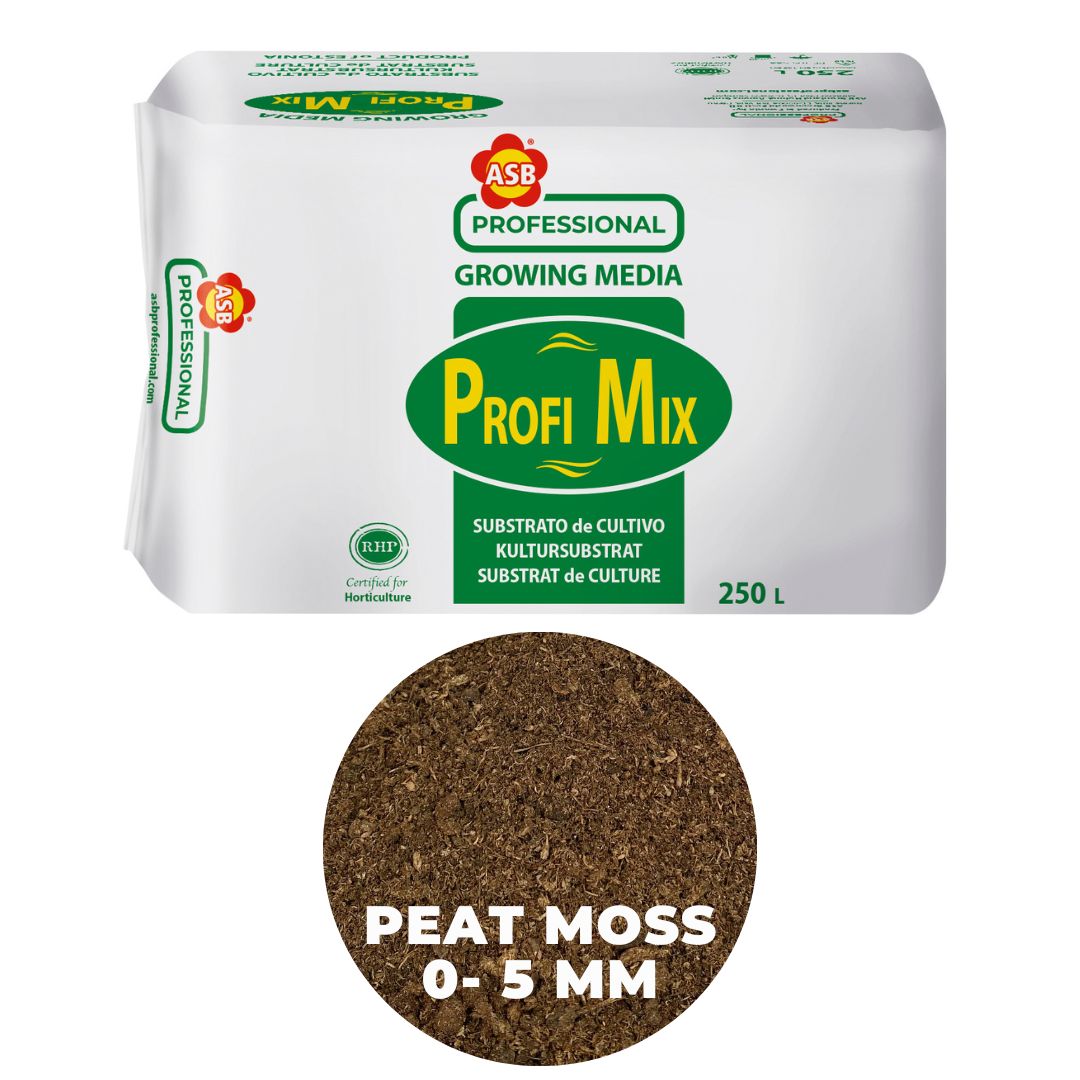
ASB Blueberry Peat Base WP05
A 0-5 mm option for blueberry seedlings and young plants when the finished composition includes a wetting agent.
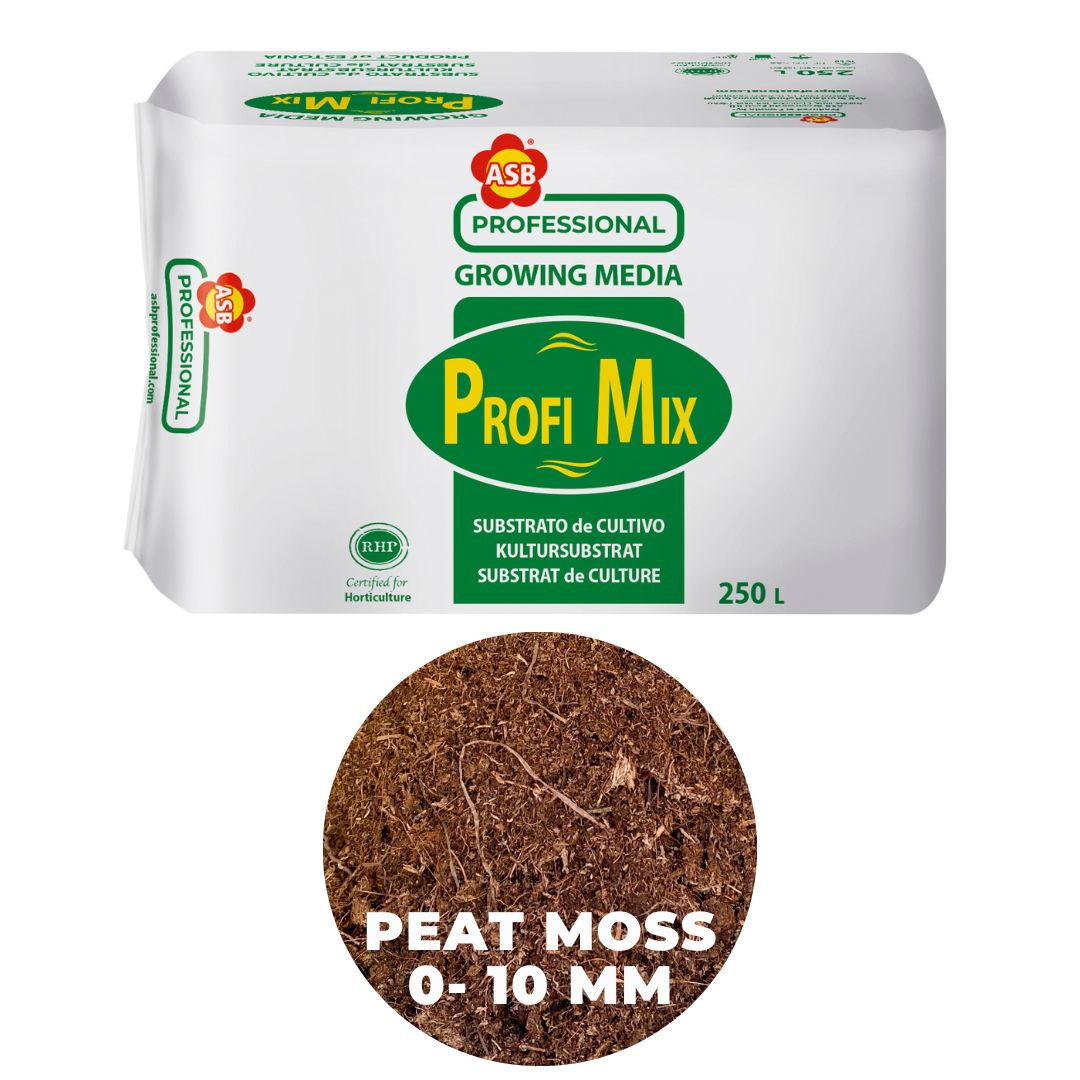
ASB Blueberry Peat Base WP010
A 0-10 mm option for blueberry seedlings and young plants when the finished composition includes a wetting agent.
How blueberry production needs change substrate priorities
| Criteria | Production situation | Main substrate priority |
|---|---|---|
| Nursery and young plant programs | Smaller containers, close root contact, early establishment, and controlled irrigation volumes. | Fine and uniform structure, predictable first wetting, even moisture distribution, and enough air space for sensitive young roots. |
| Commercial container production | Longer crop cycles, repeated irrigation, larger root systems, and strong yield expectations. | Stable acidic conditions, open structure, high oxygen availability, controlled drainage, and repeatable moisture behavior over time. |
| Hot or high-evaporation conditions | Fast dry-down, frequent irrigation, and a greater risk of uneven moisture between containers. | Enough available water without prolonged saturation, uniform irrigation distribution, and a structure that supports frequent short irrigation events. |
| Alkaline or saline irrigation water | Water chemistry may gradually increase root-zone pH or salt concentration. | Water testing, acidification or fertigation planning, drainage monitoring, and regular substrate pH and EC checks. |
| Custom substrate manufacturing | A blender needs an acidic peat base that can be combined with other components and adjusted for a regional program. | Defined peat fraction, known starting pH, packaging fit, documentation, trial validation, and clarity about the final formulation target. |
FAQ
What is the best substrate for blueberries in commercial production?
There is no single best substrate for every blueberry program. The right growing medium depends on cultivar, crop stage, container size, climate, irrigation frequency, water quality, crop duration, and whether the grower needs a ready-to-use mix or an acidic base for custom blending.
What pH should a blueberry substrate have?
Blueberries are acid-loving crops, but the useful target depends on the complete production system. Buyers should distinguish between the starting pH of a raw acidic peat base and the managed root-zone pH of a finished crop program. Irrigation water, fertilizer, amendments, drainage, and plant uptake can all change pH during production.
Why does air capacity matter in a blueberry growing medium?
Blueberry roots are sensitive to poorly aerated conditions. A commercial substrate must hold useful moisture while still allowing oxygen into the root zone after irrigation. Structure, container height, compaction, and irrigation frequency all influence that balance.
Can peat moss be used for container-grown blueberries?
Yes. Naturally acidic peat can be a useful base for container blueberry production when its fraction, water behavior, air capacity, pH direction, and final formulation fit the crop system. A raw peat base and a finished ready-to-grow substrate are not the same product.
How does irrigation water affect blueberry substrate pH?
Irrigation water can gradually change root-zone chemistry. Alkalinity, bicarbonates, salinity, sodium, chloride, and the pH of the fertigation solution can all influence substrate conditions, which is why commercial growers should test water and monitor pH and EC during the crop.
Should blueberry growers test a substrate before ordering larger volumes?
Yes. A useful trial should use the intended cultivar, container, irrigation system, fertilizer program, water source, climate, and crop duration. The trial should track first wetting, dry-down, drainage, root development, pH, EC, crop uniformity, and labor corrections.
Need a substrate direction for commercial blueberry production?
ASB Professional can help review acidic peat bases, structure options, packaging, documentation, trial planning, and whether your program needs a finished blueberry growing medium or a peat base for custom formulation.
This article is part of the ASB Professional Blog and highlights topics across events, sustainability, and technical growing media expertise. ASB Greenworld Eesti is listed as a member of the Estonian Peat Association (Eesti Turbaliit).
It helps customers and partners follow company developments, market activity, and product-related topics.
ASB Professional Editorial Team