ASB growing media labels and product names describe different parts of a formulation. In 0-5 WA NPK, 0-5 identifies the peat fraction in millimetres, WA identifies a wetting agent and NPK identifies fertiliser containing the main nutrients. The full specification adds the quantities and delivery details that the short name cannot show.
- Millimetres describe a peat fraction; litres describe a package volume.
- WA identifies a wetting agent, not fertiliser.
- An NPK grade and a fertiliser dose answer different questions.
- Keep the product specification and delivery batch reference together.
An order for ASB Professional Substrate 0-5 WA NPK contains several useful clues before the specification is opened. Problems arise when one number is used to answer the wrong question: reading a fertiliser grade as an application rate, or treating a package size as the peat fraction. Here is how to separate those details.
Read a real ASB product name
ASB Professional Substrate 0-5 WA NPK is listed in the seed and propagation range produced in Estonia. Read its short name in three parts:
- 0-5: a fine peat fraction, expressed in millimetres.
- WA: wetting agent, included to help water wet the growing medium.
- NPK: fertiliser containing nitrogen, phosphorus and potassium.
The product page specifies a 1.0 kg/m³ fertiliser charge. That rate is additional information; it cannot be calculated from the letters NPK. These naming examples belong to the ASB catalogue, rather than a universal code shared by all substrate manufacturers.
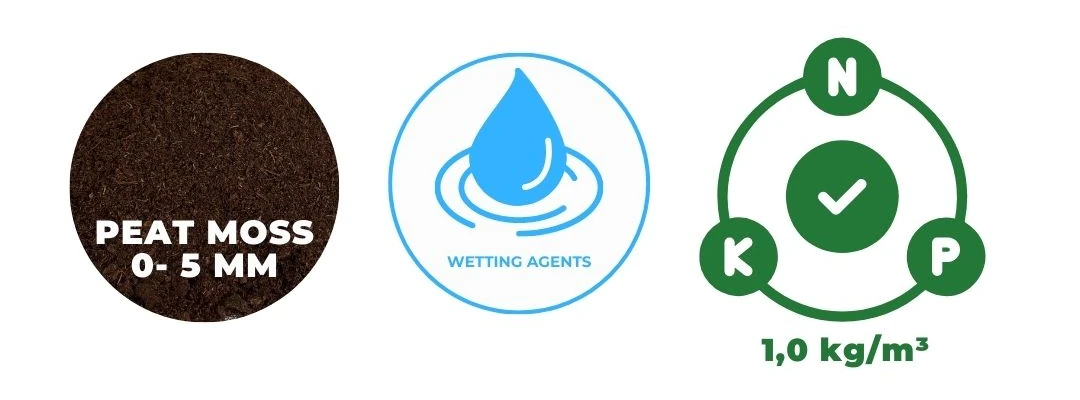
The catalogue illustration uses separate symbols for fraction, wetting agent and fertiliser charge. Those symbols help explain the formulation. They do not replace the delivery label or the specification agreed for the order.
WA and NPK do different jobs
A wetting agent helps the medium take up water. It is not a nutrient charge. A product name containing WA therefore does not, by itself, tell the grower that fertiliser is included or how much is present.
Compare the example above with ASB Professional Substrate 0-25 WA, which the catalogue describes as pH-adjusted peat with a wetting agent. Check its full composition rather than transferring the NPK rate from another product with a similar name.
The reverse assumption is also unreliable: a shortened name that omits WA is not proof that the formulation contains no wetting agent. Website titles, quotations and printed descriptions can abbreviate different details. Use the full product specification to settle the composition.
What do the three NPK numbers mean?
A fertiliser grade such as 15-10-20 describes the fertiliser itself. University of Minnesota Extension explains the conventional order as nitrogen, phosphate expressed as P2O5, and potash expressed as K2O, given as percentages by weight.
The grade does not tell you how many kilograms of that fertiliser are incorporated into a cubic metre of growing medium. It also does not mean that the finished substrate contains 15% nitrogen. Keep the analysis of the fertiliser separate from its incorporation rate.
For illustration, 1.0 kg of a 15-10-20 fertiliser contains 0.15 kg, or 150 g, of nitrogen. If that kilogram is incorporated per cubic metre, the addition supplies 150 g of nitrogen per cubic metre. This is an arithmetic example, not a recommendation for a crop or a claim that every ASB NPK mix uses that grade.
A label that says only NPK or 1.0 kg/m³ does not establish a release period. Ask which fertiliser is included before assuming it is controlled-release or that it will feed the crop for a fixed number of weeks.
Four numbers that should not be confused
| Marking | Read it as |
|---|---|
| 0-5 mm | Peat fraction in millimetres |
| 15-10-20 | Nutrient analysis of the fertiliser |
| 1.0 kg/m³ | Fertiliser added per cubic metre of substrate |
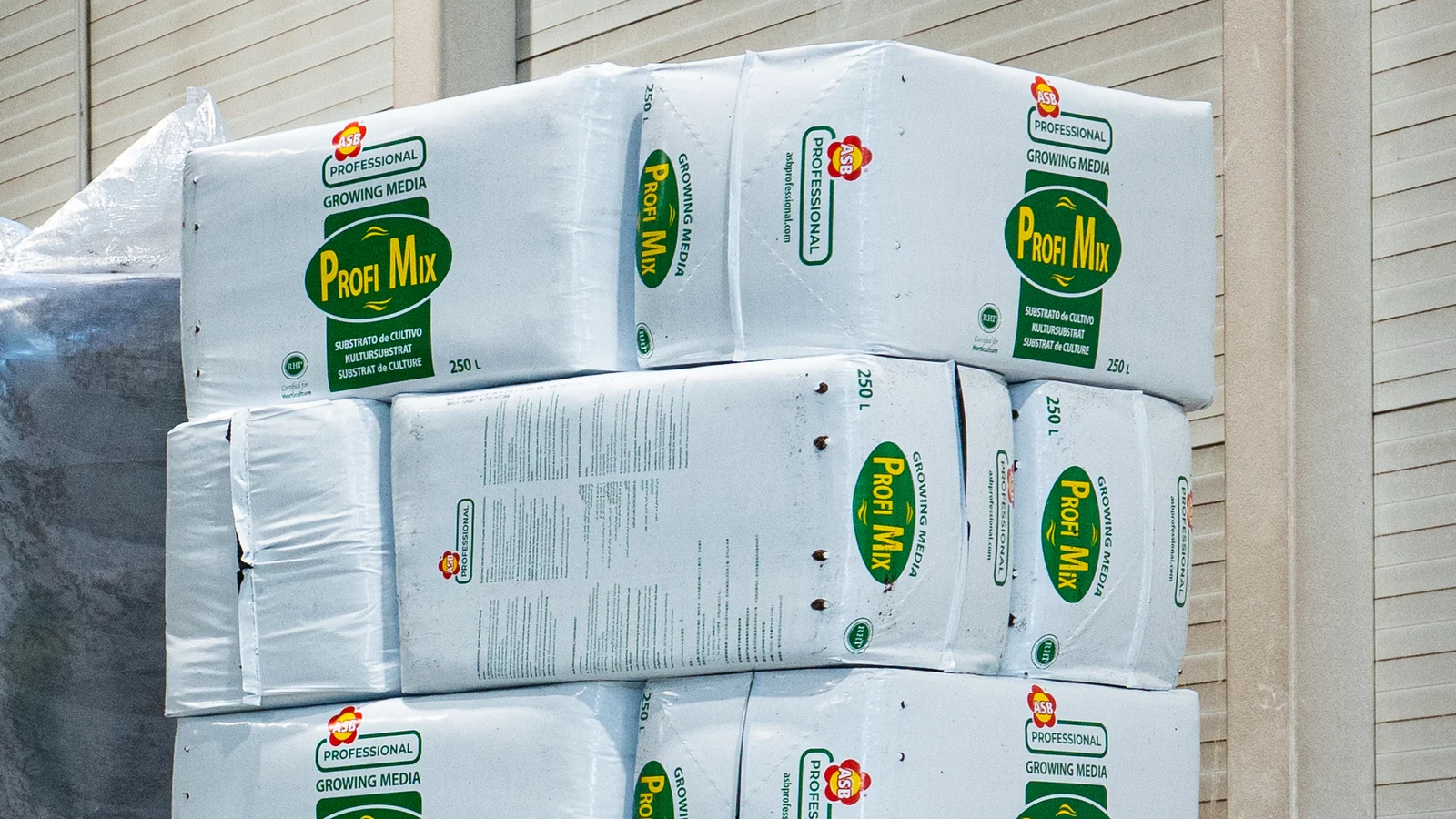
| 250 L | Declared package volume |
A missing quantity cannot be inferred from a different marking. Two mixes can share a fraction and package volume while carrying different additions. For a fuller explanation of the millimetre ranges, see Compare Peat Moss Fractions.
Perlite and wood fibre are composition details
A component name identifies another part of the recipe. Its inclusion percentage still needs to be stated. For example, ASB Professional Substrate 0-10 Perlite lists 15% perlite alongside its 0-10 mm peat fraction and fertiliser charge. The 15% component share and the 1.0 kg/m³ fertiliser rate are different kinds of quantity.
Read wood-fibre and other component descriptions in the same way: establish what the component is, how much is included and which formulation the statement belongs to. Do not transfer a percentage between product families because the packages use similar branding. The separate peat-and-perlite guide covers the role of that component in a growing mix.
Match the specification to the delivered package
Before using the material, compare the label with the order confirmation and the current product specification. Keep one record with the product name or order-specific reference, package format, agreed composition and delivered batch identification.
Photograph the actual delivery label while it is readable. If an internal product reference and a batch reference both appear, retain both rather than choosing whichever number looks most important. Their format can differ between products and production sites; the supplier can explain which reference is needed to trace the delivery.
A measurement on the specification should also retain its units and test method. A pH or EC figure is not another code to decode from the product title. The pH and EC guide explains why the measurement method belongs with the result.
A clear way to ask about an unclear label
Send the ASB team the complete product name, a label photograph, the order reference and the specific quantity you need clarified. For example: please confirm the fertiliser grade and incorporation rate for this delivery. That is more useful than asking whether the mix has enough NPK, which leaves both the product and the intended crop unspecified.
Use the Worldwide Downloads section for the available product material, and keep the agreed order specification with the delivery record. The short name helps locate the right product; the full documents establish exactly what has been supplied.
Recommended ASB products
These products are commonly evaluated with the strategy covered in this article.
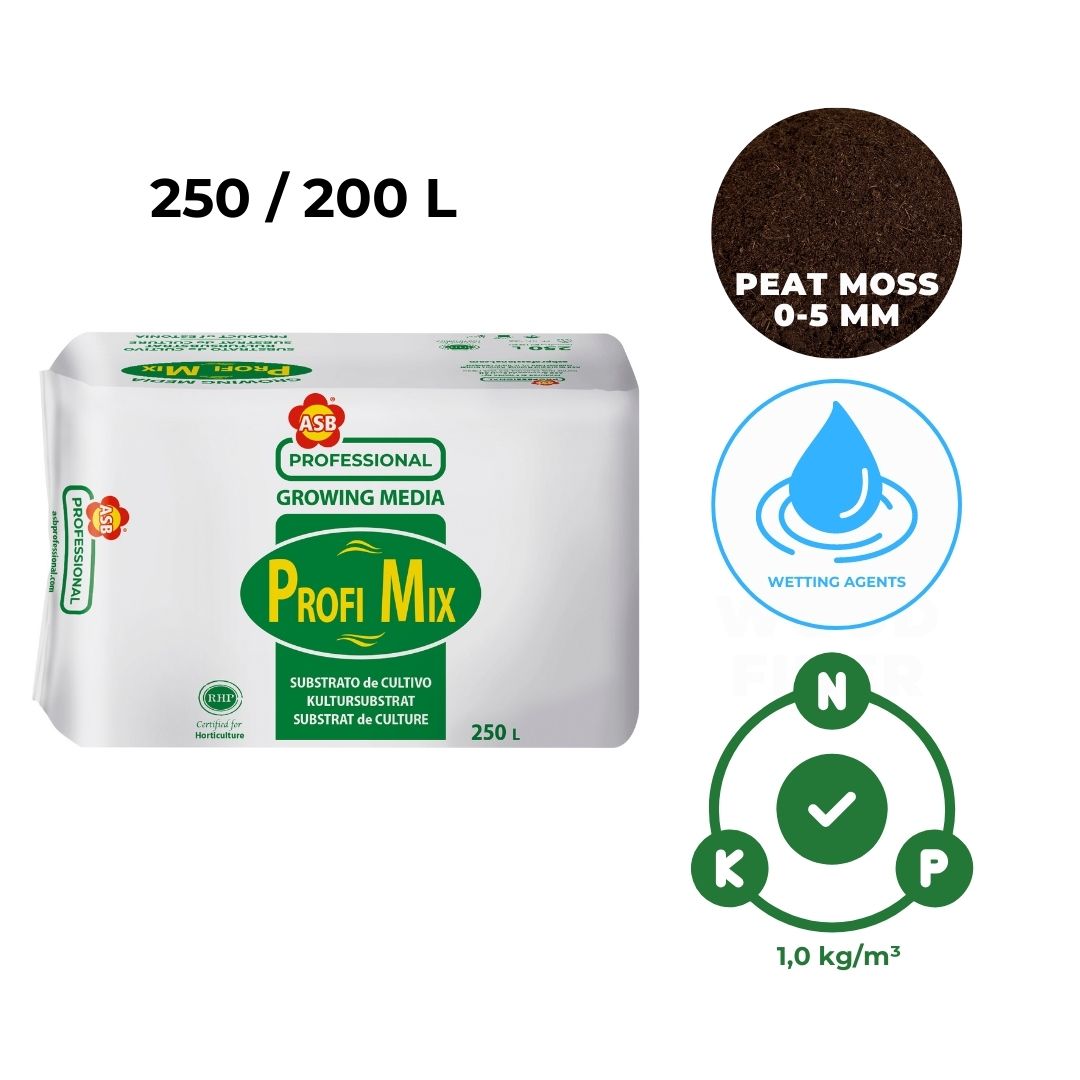
ASB Professional Substrate 0-5 WA NPK
The worked naming example: a fine peat fraction, wetting agent and specified fertiliser charge.
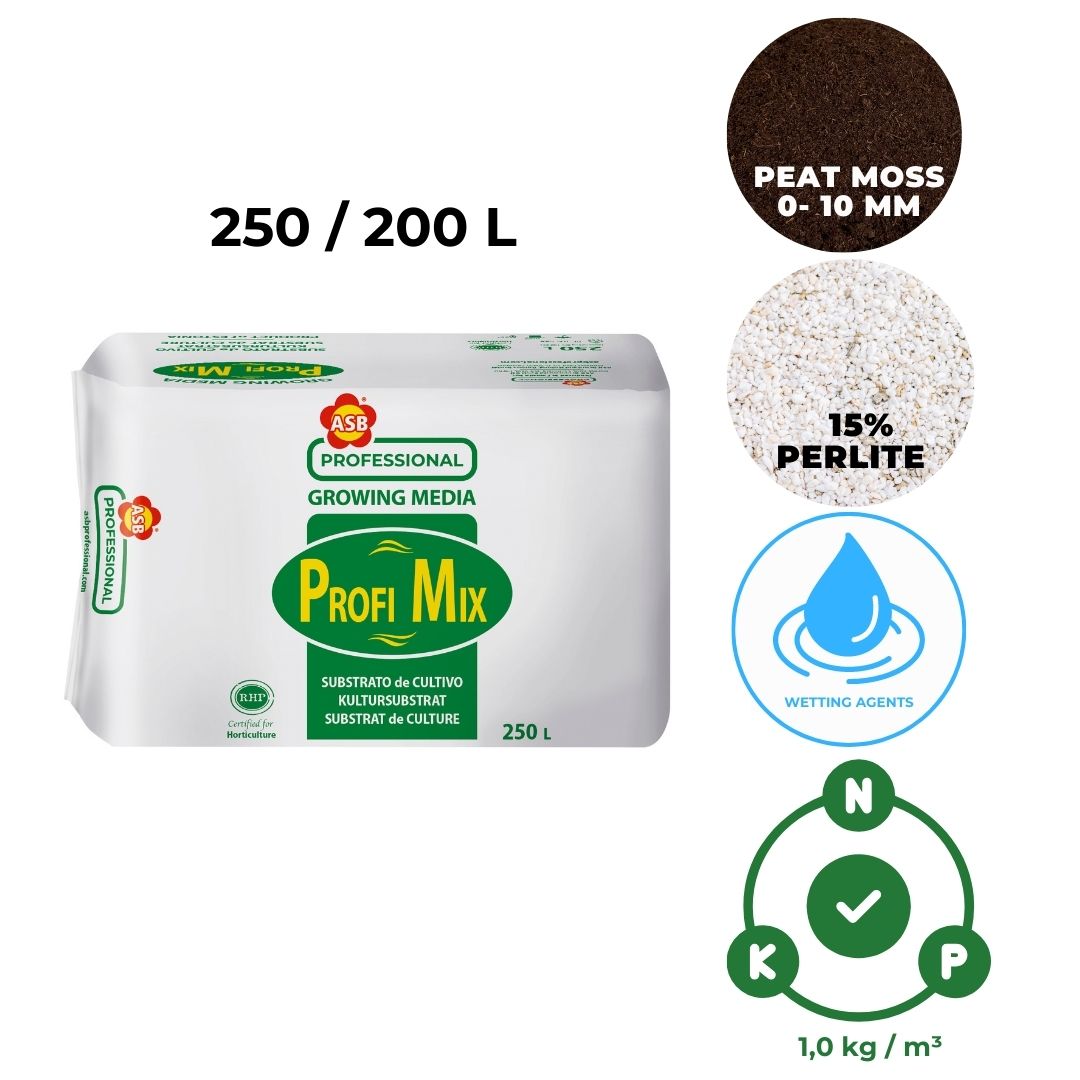
ASB Professional Substrate 0-10 Perlite
Compare a component percentage with a peat fraction and fertiliser incorporation rate in the same specification.
FAQ
What does WA mean in an ASB growing media name?
WA identifies a wetting agent. It describes an addition that helps water wet the growing medium, not a fertiliser charge. Check the full specification for its quantity and the other components included in the mix.
What does NPK mean on growing media labels?
NPK identifies fertiliser containing nitrogen, phosphorus and potassium. A conventional grade such as 15-10-20 gives percentages of nitrogen, phosphate as P2O5 and potash as K2O in the fertiliser. The amount incorporated into the growing medium must be stated separately.
Does 1.0 kg/m³ mean one kilogram of nitrogen?
Not when it describes a fertiliser incorporation rate. It means one kilogram of that fertiliser per cubic metre of substrate. The nitrogen supplied depends on its analysis: one kilogram of a fertiliser containing 15% nitrogen supplies 150 g of nitrogen.
Does 0-5 on the product name describe the bag size?
No. In this ASB example, 0-5 identifies the peat fraction in millimetres. A separate volume such as 250 L describes the package. Neither number establishes the fertiliser rate or the full composition.
Does NPK mean that the mix contains slow-release fertiliser?
No. The letters identify the main nutrients, not a release mechanism or feeding duration. Check the fertiliser type and incorporation rate in the specification before deciding how the starter charge fits the crop's feeding programme.
What should I send ASB if a product label is unclear?
Send a readable photograph of the delivery label, the complete product name, order reference and batch reference where available. State the detail to clarify, such as the fertiliser grade, incorporation rate or wetting-agent inclusion.
Need help identifying a formulation?
Send the product name, order reference and a photograph of the delivery label so the ASB team can clarify the specification.
ASB Professional Editorial Team