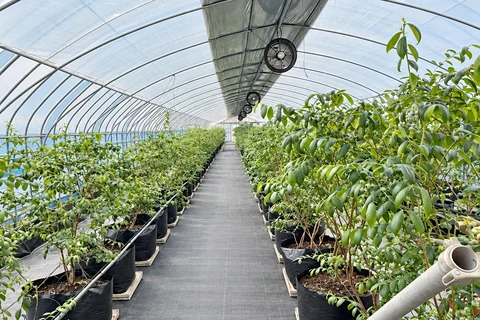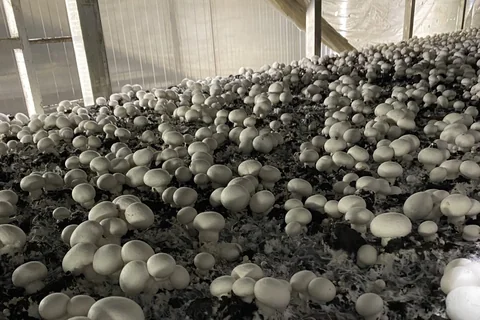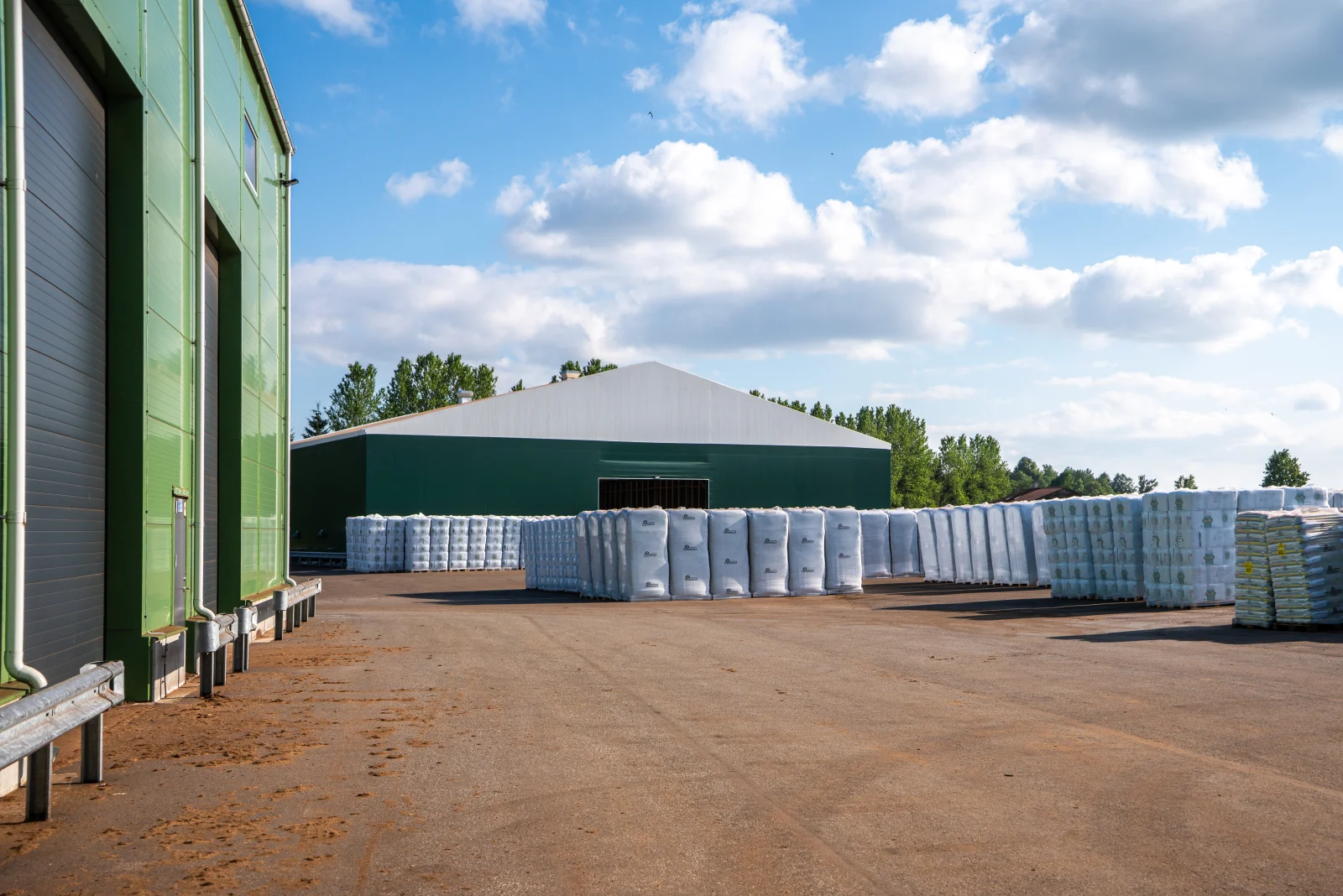
A professional growing media supplier is defined by what it can document and repeat, not by the word "professional" on its website. Buyers should expect a stated peat type, fraction, pH and nutrient charge for every product, batch-to-batch consistency backed by production controls, independent certification where it applies, support for a real trial before a volume order, and packaging that scales from bag to bulk. ASB Professional has separate Worldwide and North America product ranges built on Estonian and Canadian peat; the ASB Group history in peat and growing media dates to 1958.
- "Professional" in growing media should mean a defined, documented specification, not a marketing label.
- A professional supplier can state peat type, fraction, pH and nutrient charge for a product and repeat it on the next delivery.
- Regular potting soil is designed for broad consumer use, while a professional substrate should have a defined, documented commercial specification.
- Independent certification, such as RHP, and traceable sourcing give buyers a way to verify claims instead of taking them on trust.
- A professional supplier should support a real trial before a volume commitment, not just send a data sheet.
- ASB Professional has separate Worldwide and North America product ranges, backed by an ASB Group history in peat and growing media dating to 1958.
"Professional growing media supplier" is a phrase used by almost every peat and substrate business, yet it describes very different levels of documentation, consistency and support. This guide sets out what should actually distinguish a professional supplier before a buyer starts comparing offers, so the word means something more specific than a bigger bag or a nicer website.
The short version: professional growing media is defined by what a supplier can document and repeat, not by what it calls itself.
What "professional" should mean in practice:
A professional growing medium is engineered for a defined crop, container, irrigation method and production stage. That means the supplier can state the peat structure and fraction, the pH, the fertilizer or starter nutrient charge, whether a wetting agent is included, and any added component such as perlite or wood fiber. Each of those is a measurable specification, not a description. A supplier that can only say "premium substrate" or "professional mix" without attaching numbers to it is using the word as marketing rather than as a claim a buyer can check.
This matters because a crop programme is built around a specific substrate behaviour. Fill rate, first wetting, re-wetting, drainage, and early root development all depend on the actual fraction, structure and nutrient charge of the material, not on the label on the bag.
How this differs from regular potting soil:
Regular potting soil is a general consumer blend designed to be broadly acceptable for home-garden use, not to hold a documented specification for one commercial crop programme. Professional growing media is graded and produced to a defined recipe so a buyer can verify the intended structure, pH, nutrient charge and repeatability from one delivery to the next. This is why nurseries, greenhouse operations and specialised programmes such as mushroom farms specify a documented substrate rather than a bag of consumer potting soil, even though both can be peat-based products.
Certification and traceability:
A specification is only as useful as the buyer's ability to trust it. Independent certification is one way to verify that trust rather than take it on faith. RHP is an independent quality framework for professional horticultural substrates, covering water uptake, air content, pH, EC, nutrients and phytosanitary risk control. ASB Greenworld Eesti OÜ has an RHP-certified company profile for its professional substrates. A certification claim only means something if it can be checked against the certifying body and the scope it actually covers, so ask which entity holds the certificate and for which product range.
Traceable sourcing is the other half of this. The ASB Group history in peat and growing media dates to 1958. ASB Professional uses Estonian peat for its Worldwide range and Canadian peat for its North America range, rather than an unspecified or shifting supply base. A supplier that cannot say where its raw material comes from cannot fully control what it is selling.
Batch consistency, not a single good sample:
A single sample only proves what a supplier can produce once. Commercial buying depends on the next delivery matching the last one in fraction, moisture, pH and structure, because the crop programme, irrigation routine and filling line are all tuned to a specific material. The growing media batch consistency guide explains how specifications, comparable test methods, certification and receiving records help buyers verify repeatability across deliveries.
Worldwide and North America are not the same market:
Peat sourcing, packaging formats and crop priorities differ by region. A supplier that sells one identical range everywhere may not have adapted to local production realities, whereas separate product ranges and commercial support can reflect that work. ASB Professional maintains separate Worldwide and North America ranges: Worldwide is built primarily on Estonian peat with export-oriented packaging from bag to bulk formats, while North America is built on Canadian sphagnum peat moss with its own product families and packaging, including OMRI Listed organic options. Asking whether a supplier's range is adapted to your region, or simply exported unchanged, is a useful question on its own.
Trial support before a volume commitment:
A supplier confident in its product should be able to support a direct comparison rather than ask a buyer to commit from a data sheet. That means applying the material the way the buyer's own system actually works, running it through a full production cycle, and comparing the result against the material currently in use. A supplier that resists this step, or offers only a small retail sample with no structured way to evaluate it at production scale, is asking for trust it has not demonstrated.
Packaging and logistics as a signal:
The packaging range a supplier offers says something about its production capability. A professional supplier should be able to move from small bag formats for trials up to bulk and bale formats for volume production, and plan delivery against its own production schedule rather than reselling whatever stock happens to be available. A business offering only one retail bag size, regardless of the volume requested, is generally not set up as a commercial production supplier.
Common mistakes when evaluating a "professional" supplier:
- Accepting "premium" or "professional" as a specification instead of asking for the actual fraction, pH and nutrient charge.
- Comparing suppliers on price per bag without confirming whether the products are actually built to the same specification.
- Treating a single good sample as proof of ongoing batch consistency.
- Not asking which body, if any, certifies the supplier's claims, or accepting a certification claim without checking its scope.
- Committing to volume before running a structured trial on the buyer's own system.
- Assuming a supplier's global product range is equally suited to every region it ships to.
For a structured way to score candidate suppliers once you know what to look for, see the commercial greenhouse substrate supplier checklist. For a closer look at how one professional supplier's production actually works, from peat processing through export-ready packaging, see Professional Growing Media Manufacturer in Estonia.
What to send when contacting a supplier:
Before requesting information, define:
- The crop or intended use and the production stage it is for.
- Required structure, fraction and pH direction.
- Packaging preference and expected volume.
- Destination and delivery period.
- Documentation you will need, and whether you want to arrange a trial.
A supplier that responds to this with a specific product and a realistic trial plan is demonstrating the documentation a professional supplier should have. A supplier that responds only with a generic price list is not, whatever the word on its homepage says.
Recommended ASB products
These products are commonly evaluated with the strategy covered in this article.
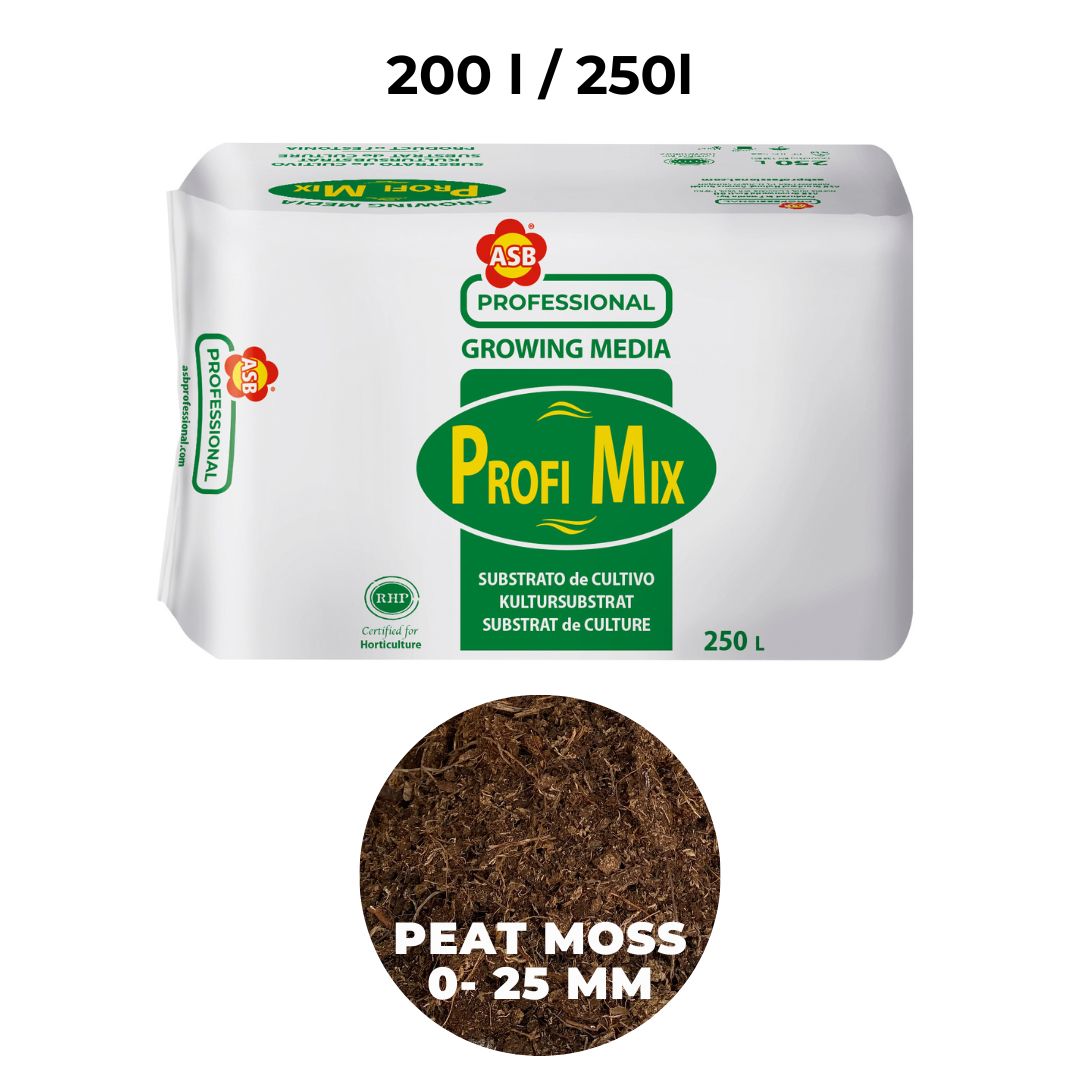
ASB Professional Substrate WP025
A general-purpose 0-25 mm raw peat fraction with a stated natural pH, packaging range and production origin, for buyers who want a documented starting material.
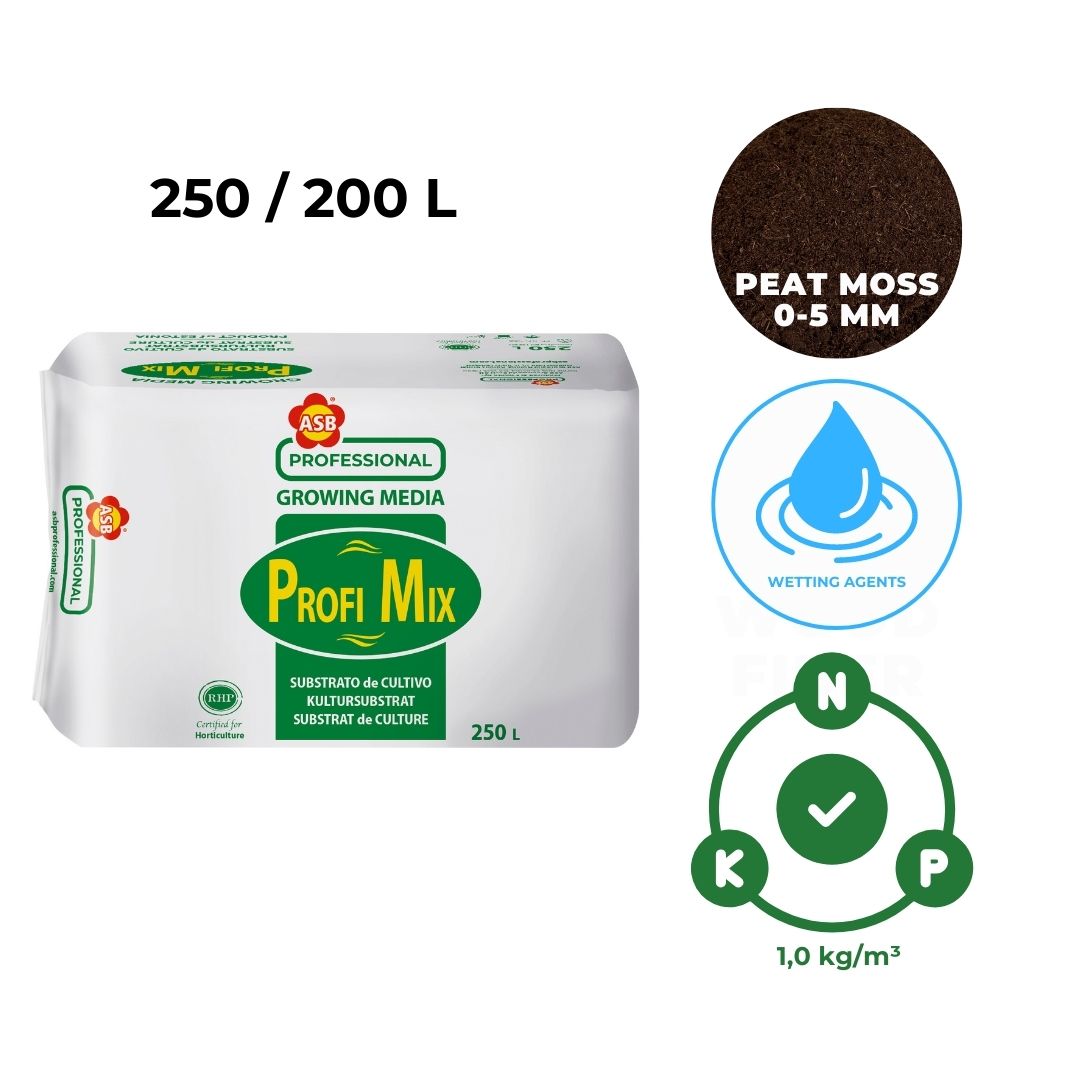
ASB Professional Substrate 0-5 WA NPK
A defined 0-5 mm propagation substrate with a stated pH and starter nutrient charge, an example of a fully specified professional product.
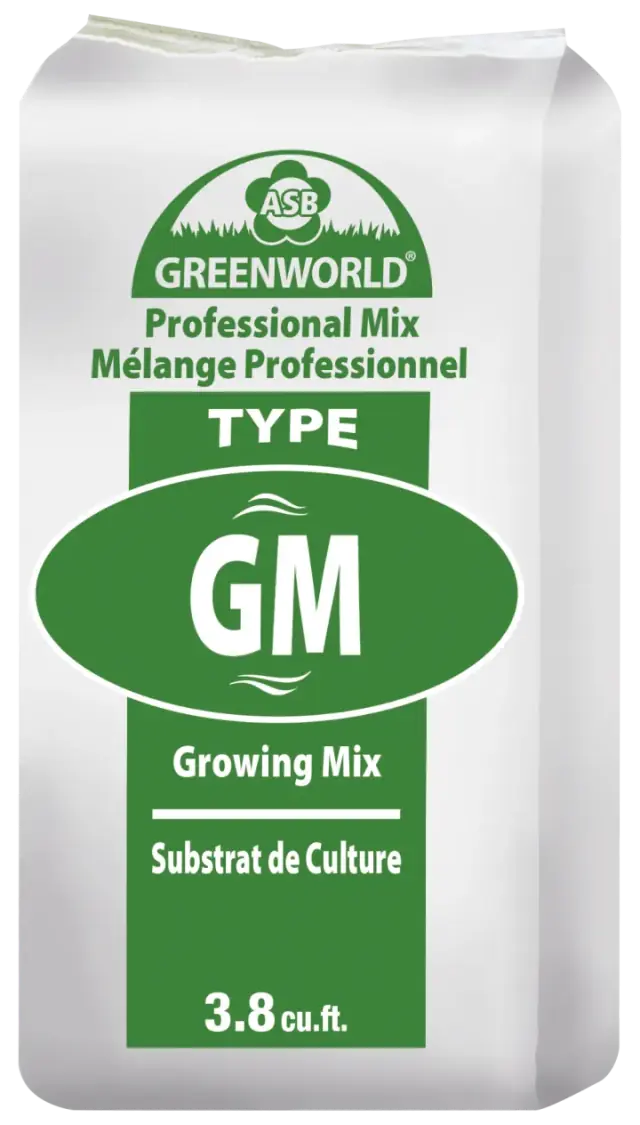
ASB Growing Mix
A North America-specific all-purpose mix, relevant when comparing whether a supplier adapts its range to a region rather than selling one global product.
Professional supplier vs generic bagged-soil seller
| Criteria | Professional growing media supplier | Generic bagged-soil seller |
|---|---|---|
| Specification | States peat type, fraction, pH, EC and nutrient charge for each product, in writing. | Describes the product as "premium potting mix" or similar, without a measurable specification. |
| Batch consistency | Production is controlled and documented so the next delivery matches the last one. | Consistency is not tracked or communicated; each batch is whatever it is. |
| Certification | Can point to independent certification or a defined quality framework, such as RHP. | Certification is not mentioned, or the claim cannot be verified against a real certificate. |
| Trial support | Will support a real trial on the buyer's own crop and system before a volume order. | Expects a commitment based on the data sheet or a single sample. |
| Packaging and logistics | Offers a packaging range from bag to bulk and can plan delivery against a production schedule. | Offers one retail bag size regardless of the volume requested. |
FAQ
What does "professional growing media" actually mean?
Professional growing media is a horticultural substrate engineered for a defined crop, container, irrigation method and production stage, with a stated peat structure, pH, fertilizer charge, wetting agent and any added components such as perlite or wood fiber. The word "professional" should describe a documented, repeatable specification, not just a larger package size than a garden-centre product.
How is professional growing media different from regular potting soil?
Professional growing media is a controlled horticultural medium with a defined pH, porosity and nutrient level, produced to a repeatable specification. Regular potting soil is generally formulated for broad consumer use rather than a documented commercial crop specification. That is why commercial growers, nurseries and mushroom farms specify a documented substrate rather than an off-the-shelf bag of soil.
What certifications indicate a supplier is genuinely professional?
RHP is an independent quality framework for professional horticultural substrates covering areas such as water uptake, air content, pH, EC, nutrients and phytosanitary risk control. ASB Greenworld Eesti OÜ has an RHP-certified company profile. A certification claim is only useful if the buyer can verify it against the certifying body, so ask for the certificate and the scope it covers.
Why does batch consistency matter more than one good sample?
A single sample only shows what a supplier can produce once. Commercial production depends on the next delivery matching the last one in fraction, moisture, pH and structure, because a crop programme is built around a specific substrate behaviour. Ask what is measured on each production batch, what documentation travels with a delivery, and what happens when a batch falls outside specification.
Should a professional supplier support a trial before a large order?
Yes. A supplier confident in its product should be able to support a direct comparison: apply the material the way the buyer's own system normally works, run it through a full production cycle, and compare the result against the current material. A supplier that only offers a data sheet and asks for a volume commitment without that step is asking the buyer to take the claims on trust.
Does a professional supplier need separate product lines for different regions?
Not always, but it is a useful signal. Peat sourcing, packaging formats and crop priorities differ between regions, so a supplier serving multiple markets with one identical range may not have adapted to local production realities. ASB Professional maintains separate Worldwide and North America product ranges, built on Estonian and Canadian peat respectively, with their own packaging and sales routing.
What information should I send when contacting a growing media supplier?
Share the crop or intended use, required structure and fraction, pH direction, packaging preference, expected volume, destination and delivery period. A supplier that can respond with a specific product and a trial plan from that information is demonstrating the documentation a professional supplier should have; a supplier that responds only with a generic price list is not.
Evaluating a growing media supplier?
Share your crop, required structure, packaging preference, volume and destination, and the ASB Professional team can confirm a specific product and a realistic trial plan.
This article is part of the ASB Professional Blog and highlights topics across events, sustainability, and technical growing media expertise. ASB Greenworld Eesti is listed as a member of the Estonian Peat Association (Eesti Turbaliit).
It helps customers and partners follow company developments, market activity, and product-related topics.
ASB Professional Editorial Team