Peat substrates for mushrooms are specified differently from horticultural growing media, because the casing layer is a water reservoir and a fruiting trigger rather than a root zone. A mushroom farm buying casing peat should confirm the peat type, the fraction, the pH reference point before and after liming, moisture and bulk density at delivery, structural stability after wetting and ruffling, batch-to-batch consistency, and a packaging format that matches the farm intake. ASB Professional supplies black peat in 0-5 mm and 0-10 mm fractions from its production in Estonia, either already adjusted to pH 7 and ready for casing use or as raw material at its natural pH for farms that lime it themselves, in 200 L, 250 L and 4500 L formats, plus white peat fractions for farms and blenders that build their own casing recipe.
- A casing layer is applied at roughly 4-5 cm and has to carry the crop’s water demand through the flushes; it is a water reservoir and a fruiting trigger, not a root zone.
- Raw peat is acidic at around pH 3.5-4.2, while a finished casing layer is worked to a near-neutral to slightly alkaline range, commonly cited as roughly pH 6.5-8. ASB supplies mushroom farm peat both ways: already adjusted to pH 7 and ready for casing, or as raw black peat at its natural pH for farms that lime it themselves.
- Casing is typically applied at about 75-80% water content, so moisture and bulk density at delivery change both the water dosing and the real cost per cubic metre.
- Structural stability after wetting, application and ruffling matters more than any single number on a specification sheet.
- Batch-to-batch consistency and a packaging format that matches the farm intake are specifications, not commercial extras.
- ASB Professional supplies black peat in 0-5 mm and 0-10 mm at pH 7 in 200 L, 250 L and 4500 L formats from its Estonian production, plus white peat fractions for farms blending their own casing.
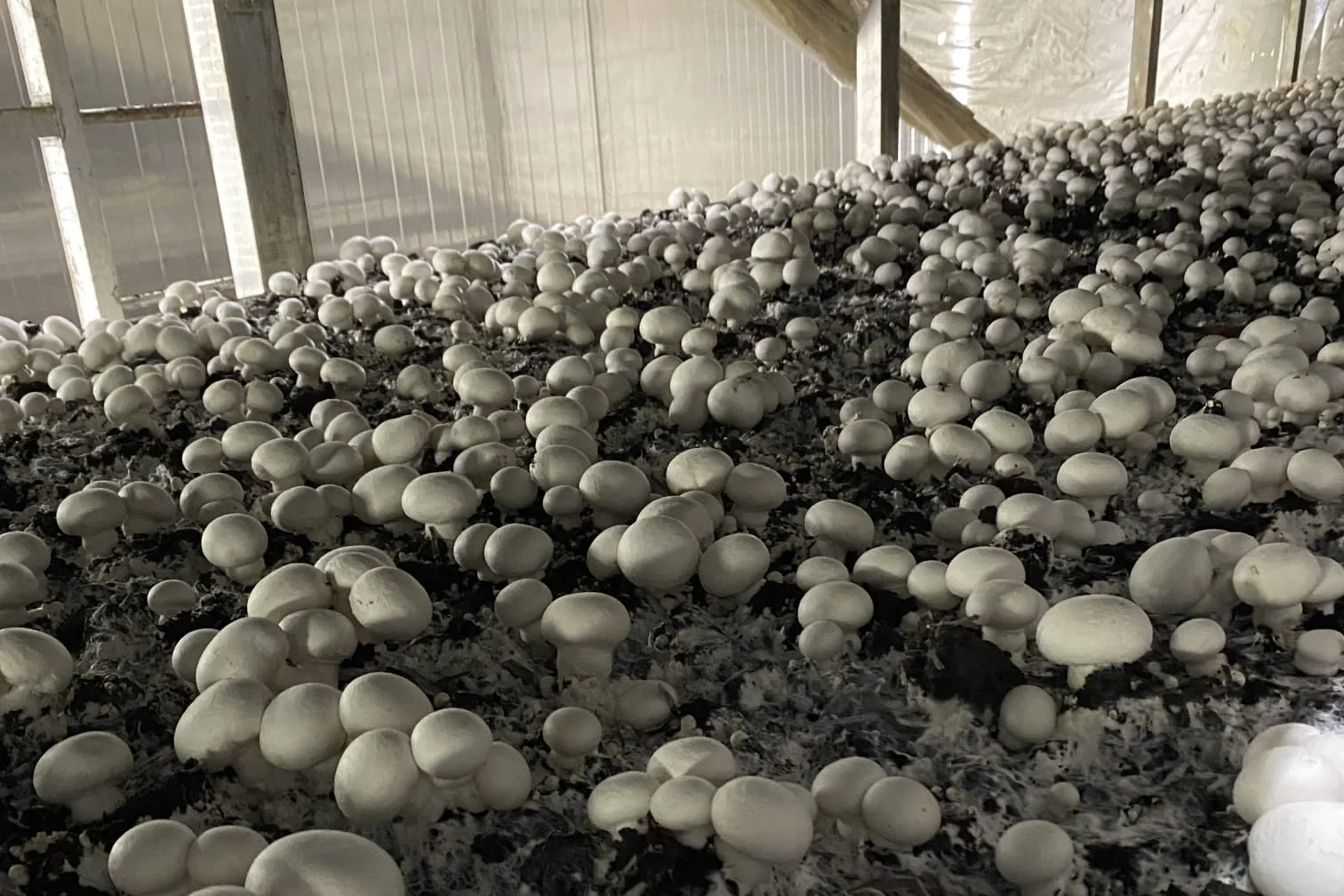
Casing soil is the last layer a mushroom crop sees, and it is the layer that decides how the crop pins, flushes and finishes. It is also the layer most often bought on price alone. Peat substrates for mushrooms have to be specified differently from horticultural growing media, because the casing is not a root zone. The mycelium colonises the compost underneath. The casing sits on top as a controlled water reservoir and as the physical trigger for fruiting.
That difference matters commercially. A peat that performs well as a potting substrate is not automatically a peat that performs well as a casing raw material, and a quotation that says only "peat" tells a mushroom farm almost nothing.
For most commercial Agaricus bisporus production the casing layer has to do four things at once. It has to hold a large volume of water and give it back gradually across the flushes. It has to keep enough air space for mycelium to grow up into it. It has to stay structurally intact through wetting, application, watering and ruffling. And it has to behave the same way in the next delivery as it did in the last one.
Peat does the first three well. The fourth is a supplier question rather than a material question, and it is the one most often left out of the purchase specification.
What the casing layer actually has to do:
A casing layer is normally applied at around 4 to 5 cm, and it has to carry the crop through to the end of the flushes. Water applied to the surface must be held in the layer and released over the days that follow, without the surface sealing and without the layer drying unevenly across the bed or shelf. A casing that holds too little water forces more frequent watering, which disturbs pinning. A casing that holds water but will not release it leaves the crop short at exactly the point where the first flush draws hardest.
The layer also has to allow gas exchange. Mycelium typically needs about five to seven days to grow up through the casing before the layer is ruffled or CACed, pinning follows a few days later, and the first flush usually arrives somewhere around 18 to 21 days after casing. That schedule only holds if the casing keeps its air space. If the structure collapses into a dense mat after the first watering, the pinning surface and the flush pattern both suffer, whatever the material looked like on arrival.
This is why fraction and structure carry so much weight in a casing specification, and why they belong in writing rather than in a verbal agreement.
The specifications to put in writing:
Peat type. Casing recipes are normally built on more decomposed peat, usually described as black peat, because of how it holds and releases water. Less decomposed white peat fractions are also used, generally to open the structure or adjust water behaviour in a blend. Both belong in the specification by name, not under a generic heading such as "peat".
Fraction. The particle size range sets the density of the finished layer, its air space and how evenly it wets. Casing work sits in fine ranges: a 0-5 mm fraction gives a tighter, more uniform layer, while 0-10 mm keeps more coarse structure and more air space in the casing. Which one suits a farm follows from the casing depth, the application method and the watering routine. Once it is chosen it should stay fixed, otherwise results between crops cannot be compared.
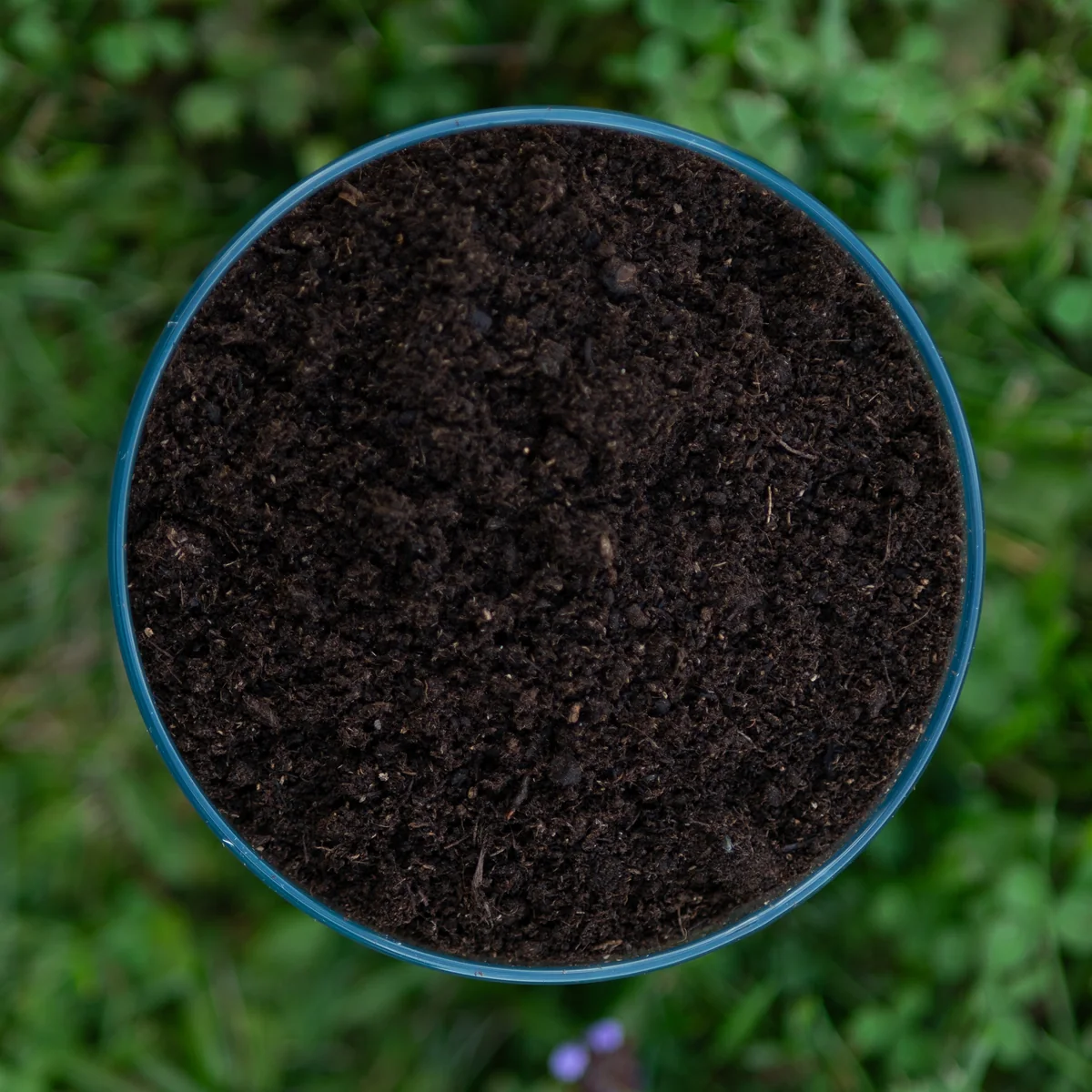
pH and the reference point. Raw peat is naturally acidic, commonly around pH 3.5 to 4.2, while a casing layer for Agaricus bisporus is normally worked into a near-neutral to slightly alkaline range, commonly cited as roughly pH 6.5 to 8, using a lime source such as limestone flour or sugar beet lime. ASB Professional supplies mushroom farm peat both ways: already adjusted to pH 7 and ready for casing use, or as raw black peat at its natural pH of roughly 3.5 to 4.2 for farms that prefer to lime and adjust it themselves. State clearly which version is being quoted, because the on-farm process, the equipment needed and the price all differ between the two, and pH results can also differ between H2O, CaCl2 and EN extraction methods.
Because peat cannot reach the casing range on its own, lime is always part of the picture somewhere. Limestone flour or spent sugar beet lime is typically incorporated at somewhere between 50 and 125 kg per cubic metre of casing, with rates around 75 kg per cubic metre and a fine grading commonly reported as the better-performing range. Whether that step has already happened before the material reaches the farm is exactly what a buyer needs to establish, because it changes the price comparison, the on-farm process and the equipment required.
Moisture and bulk density. Casing is normally applied at roughly 75 to 80 per cent water content, so the moisture of the peat as delivered decides how much water the farm has to add, and it changes both the weight and the usable volume per unit. Bulk density affects handling, mixer loading and how much material a given casing depth actually consumes. Both belong in the agreed specification rather than being discovered on the first delivery.
Structural stability. This is the specification a datasheet cannot fully express. The question is what the material looks like after it has been wetted to target, mixed, applied at 4 to 5 cm, watered several times and ruffled. A peat that holds its structure through that sequence gives a predictable layer. A peat that breaks down gives a different crop, and it usually does so quietly, over several cycles.
Batch consistency. A casing line is tuned to a material. If moisture, fraction distribution or structure move between deliveries, the farm ends up correcting the recipe instead of running it. The growing media batch consistency guide sets out how specifications, batch identification, comparable methods and receiving checks can be used across deliveries. Consistency between deliveries is a specification in its own right, and it deserves the same weight as any technical figure.
What ASB Professional supplies:
ASB Professional supplies peat substrates for mushrooms from its production in Estonia:
- Black peat in 0-5 mm and 0-10 mm fractions, supplied either already adjusted to pH 7 and ready for casing, or as raw material at its natural pH of roughly 3.5 to 4.2 for farms that lime it themselves.
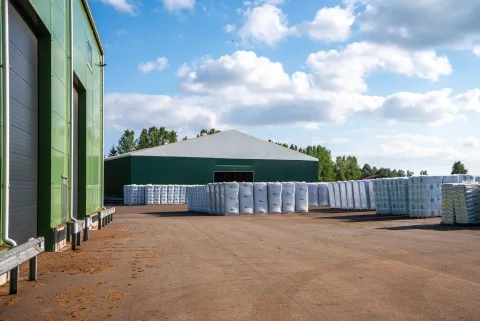
- Packaging in 200 L, 250 L and 4500 L formats.
- White peat WP05 (0-5 mm) and WP010 (0-10 mm) at natural pH 3.5 to 4.2, for blenders who want to build the acidity and the structure of the recipe themselves.
The peat is harvested and screened at the ASB Greenworld Eesti production site in Pärnu county, Estonia, on the same RHP-certified line that supplies professional horticultural substrates to growers worldwide. ASB has been producing growing media since 1958. The practical consequence for a mushroom farm is that fraction screening, moisture control and batch documentation are already part of the standard process rather than a special request, and that the same team can discuss a fraction change against a defined production capability.
Raw material or prepared blend:
Some farms buy peat and build their own casing. Others buy a prepared blend. Both are legitimate, and the difference is mainly about where the control and the process sit.
Buying peat as a raw material gives the farm control over the lime source and rate, the final pH, the moisture and any added components, and lets it adjust between crop cycles. It requires mixing capacity, water dosing, lime handling and the quality control to verify the result before every crop.
Buying a prepared blend removes that process, but it also removes the ability to correct a batch that does not suit the crop. The specifications that then matter most are the final pH, final moisture, structure at delivery, behaviour in storage and consistency between deliveries.
Farms with their own casing line generally get more out of a raw-material supply relationship, because the peat specification can be tuned against a process they already control.
Common mistakes when sourcing casing peat:
The recurring ones are:
- Comparing quotations where the pH figures refer to different materials, one before liming and one after.
- Specifying a fraction once and then accepting deliveries without checking that the fraction distribution has stayed the same.
- Judging a new peat from a bag sample instead of running it through the farm mixer, casing depth and watering schedule.
- Treating delivered moisture as a detail, when it changes both the water dosing and the real cost per cubic metre.
- Testing a new supplier on one delivery, which tells you about that batch but nothing about batch-to-batch consistency.
- Choosing a packaging format on price alone, without checking that the farm intake line can actually handle it.
Validating a new casing peat:
The most reliable check is a direct comparison rather than a paper specification. Apply the new peat exactly the way the farm's own casing recipe normally works, run it through a full cropping cycle on an actual bed or shelf, and compare mushroom size, evenness and yield against the material currently in use. A supplier that is confident in its product should be able to support that comparison rather than asking a farm to commit on the specification sheet alone.
For background on how peat type relates to structure and water behaviour, see White Peat vs Brown Peat vs Black Peat. Compare Peat Moss Fractions: 0-5 to 0-40 mm covers how particle size ranges behave in practice, and Peat Moss pH and EC explains what to ask for when a supplier quotes a pH figure.
What to send with an enquiry:
Before requesting a quotation, define:
- Whether you are buying peat as a casing raw material or a prepared blend.
- Required peat type and fraction, and the pH reference point you want quoted.
- Your casing recipe direction, including lime source and rate if you blend on the farm.
- Casing depth, application method and typical watering schedule.
- Annual volume, delivery frequency and the seasonality of your demand.
- Packaging format, intake equipment, storage capacity and destination.
- Documentation requirements and the timing you need for a trial delivery.
A complete enquiry lets the supply conversation start at the specification rather than at a price per cubic metre. For a casing programme, that is the difference between a quotation you can compare and a quotation you cannot.
Recommended ASB products
These products are commonly evaluated with the strategy covered in this article.
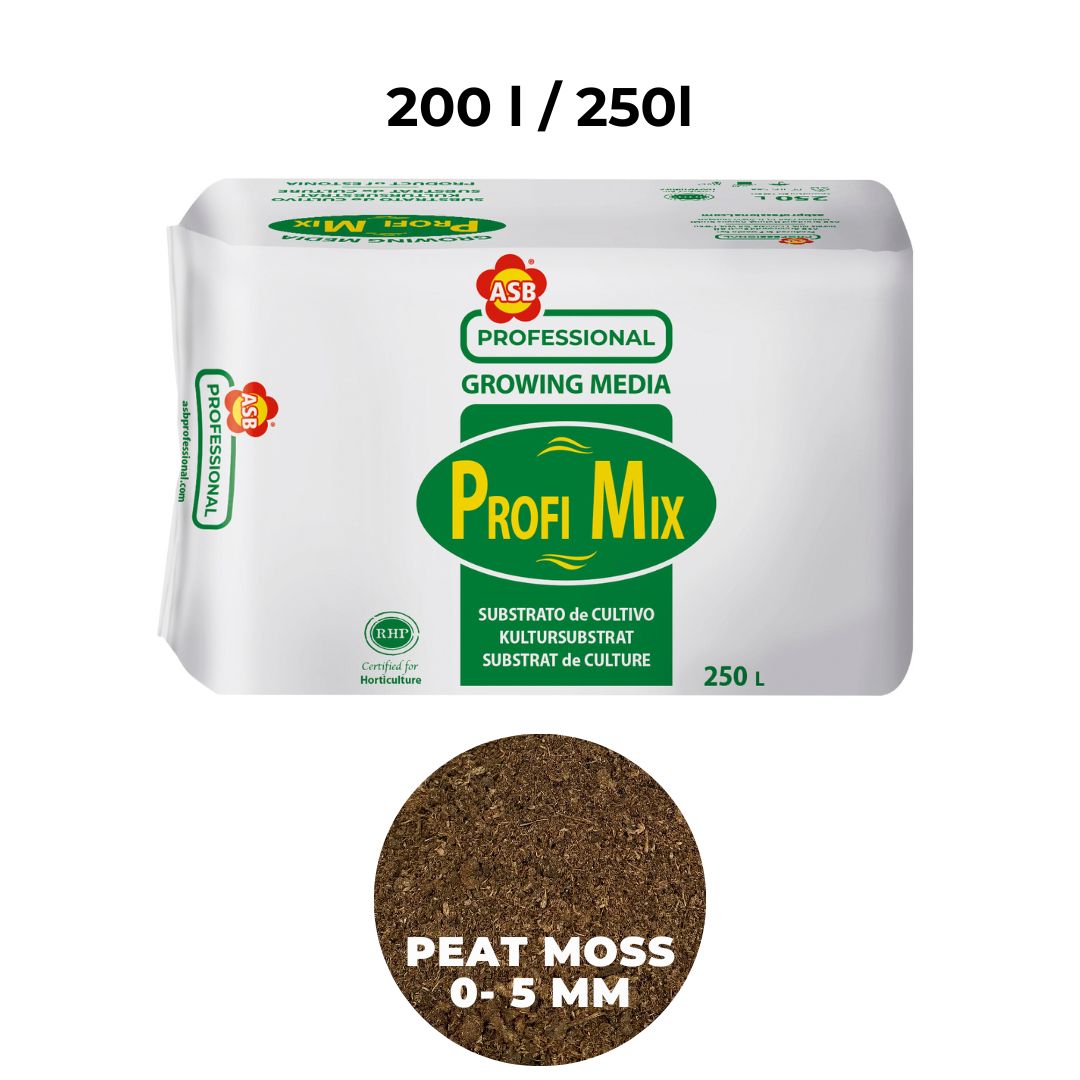
ASB Mushroom Farm Peat 0-5
Fine black peat at pH 7 for casing programmes that want a tighter, more uniform layer, available in 200 L, 250 L and 4500 L export formats.
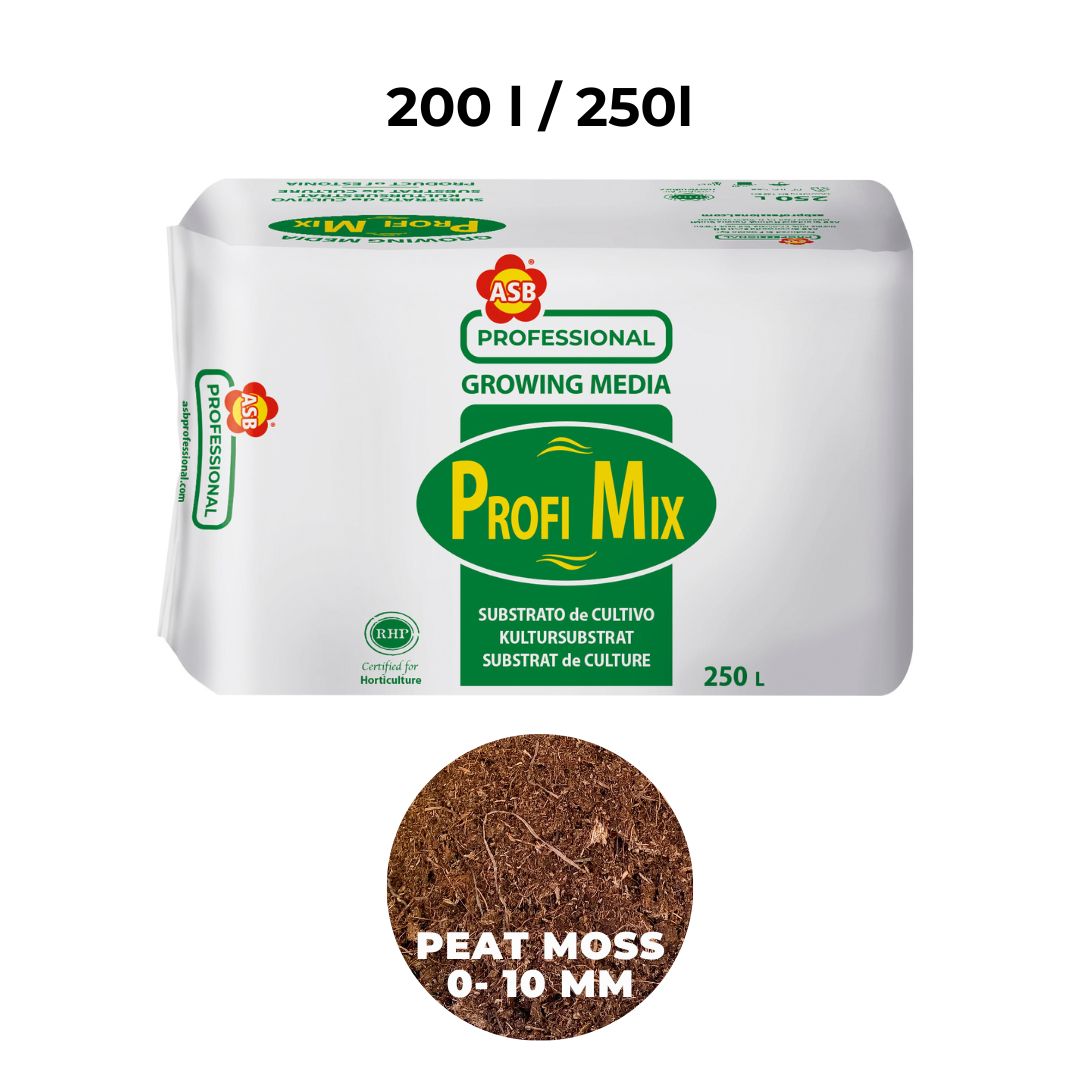
ASB Mushroom Farm Peat 0-10
Black peat at pH 7 with more coarse structure retained in the casing layer, in the same 200 L, 250 L and 4500 L formats.
ASB Professional Substrate WP05
A fine 0-5 mm white peat fraction at natural pH 3.5-4.2 for farms and blenders formulating their own casing recipe.
Two ways mushroom farms buy casing peat
| Criteria | Buying peat as a casing raw material | Buying a prepared casing blend |
|---|---|---|
| What is supplied | A defined peat fraction at a stated pH, to be limed, mixed and moistened by the farm or a casing blender. | A ready blend where peat, lime source, moisture and structure have already been combined. |
| Control over the recipe | The farm controls lime type and rate, final pH, moisture and any added components, and can adjust between crops. | The recipe is fixed by the supplier; adjustments require a specification change and a new production run. |
| What has to be verified | Fraction, peat type, delivered pH, delivered moisture, bulk density, structure after wetting and batch consistency. | Final pH, final moisture, structure at delivery, shelf life in storage and consistency between deliveries. |
| On-farm requirement | Mixing capacity, water dosing, lime handling and the quality control to check the result before every crop. | Intake handling and storage; less on-farm process, but less ability to correct a batch that does not suit the crop. |
| Typical fit | Farms and blenders with their own casing line, and programmes that want to tune casing behaviour by crop cycle. | Farms without a casing line, or programmes that prefer a single fixed input. |
FAQ
What kind of peat is used for mushroom casing soil?
Casing soil is normally built on more decomposed peat, commonly described as black peat, because it holds and releases water in the way a casing layer needs. Less decomposed white peat fractions are also used in casing recipes, usually blended in to open the structure or adjust water behaviour. The right answer depends on the farm, the crop cycle and the watering routine, so the peat type belongs in the written specification.
How deep should a mushroom casing layer be?
Commercial Agaricus bisporus casing is normally applied at around 4 to 5 cm. The depth is not a free choice: it sets how much water the layer can hold for the flushes, and it has to be matched to the fraction, the watering schedule and the intended cropping pattern. A deeper layer holds more water but delays and can spread out pinning; a shallower one dries faster and needs more frequent, smaller waterings.
What fraction should casing peat be?
Casing recipes work in fine ranges, typically 0-5 mm or 0-10 mm. A finer 0-5 mm fraction gives a tighter, more uniform layer, while 0-10 mm keeps more coarse structure and more air space in the casing. Which one suits a farm depends on the casing depth, the watering schedule and how the layer is applied and ruffled. ASB Professional supplies mushroom farm peat in both fractions.
What pH should mushroom casing soil be?
Raw peat is naturally acidic, commonly around pH 3.5 to 4.2. A casing layer for Agaricus bisporus is normally worked into a near-neutral to slightly alkaline range, commonly cited as roughly pH 6.5 to 8, using a lime source such as limestone flour or sugar beet lime. ASB Professional supplies mushroom farm peat either already adjusted to pH 7 and ready for casing use, or as raw black peat at its natural pH of roughly 3.5 to 4.2 for farms that prefer to lime and adjust it themselves. State which version you need when requesting a quotation, since the on-farm process and price differ between the two.
How wet should casing soil be when it is applied?
Casing is normally applied at roughly 75 to 80 per cent water content, so the moisture of the peat as delivered determines how much water the farm has to add to reach target. Delivered moisture also changes the weight and the usable volume per unit, which is why it belongs in the purchase specification rather than being discovered on the first delivery.
Why does structural stability matter more than the specification sheet?
A casing layer is wetted, applied at depth, watered repeatedly and often ruffled or CACed. Peat that collapses under that handling loses air space and changes how water moves through the layer, even if its delivered fraction and pH looked correct. Structure after wetting and working is what the crop actually experiences, so it should be assessed in a trial rather than assumed from a datasheet.
What packaging formats are available for casing peat?
ASB Professional supplies mushroom farm peat in 200 L, 250 L and 4500 L formats. The right format is a logistics decision: large formats reduce handling per cubic metre on a farm with the equipment to move them, while smaller formats suit lower volumes and simpler intake. Confirm the format, the compression, the delivered volume per unit and the loading plan for the destination as part of the quotation.
Sourcing peat for a mushroom farm or casing line?
Share your casing recipe direction, required fraction and pH reference, annual volume, packaging format and destination. The ASB Professional team can confirm what is available and put together a specification and trial plan for your farm.
This article is part of the ASB Professional Blog and highlights topics across events, sustainability, and technical growing media expertise. ASB Greenworld Eesti is listed as a member of the Estonian Peat Association (Eesti Turbaliit).
It helps customers and partners follow company developments, market activity, and product-related topics.
ASB Professional Editorial Team